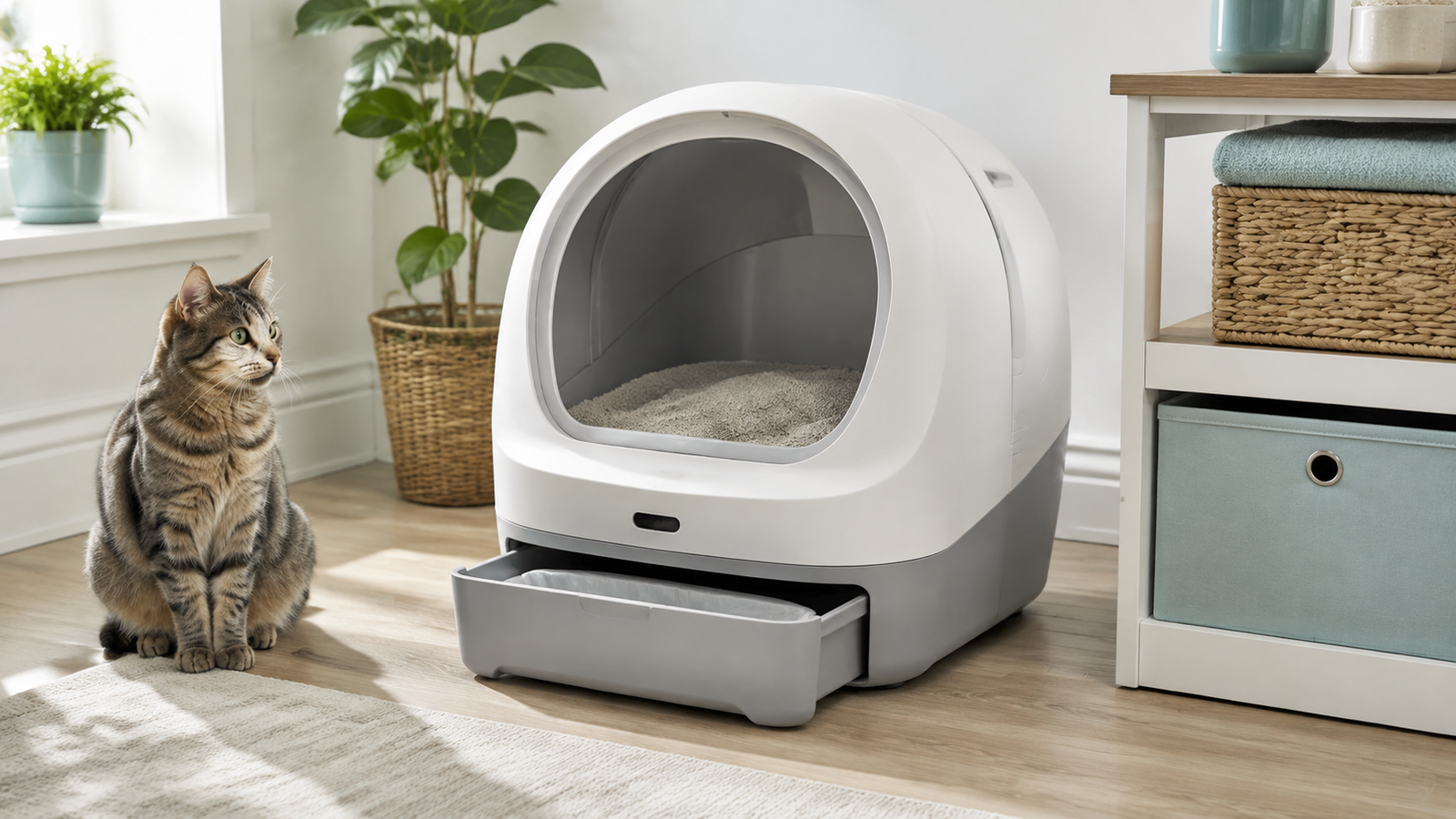
If you’re considering an automatic litter box for the first time, the idea is appealing: less scooping, a cleaner litter area, and one less daily chore. But you may be wondering what actually happens inside the machine—and whether “self-cleaning” really means you can leave the litter box completely unattended.
The basic idea is simple. A self-cleaning litter box detects when your cat has used it, waits until the cat has safely moved away, and then uses an automated mechanism to separate waste from usable litter.
This guide explains how the process works, the main types of self-cleaning systems, the safety features to look for, and the maintenance owners still need to handle.
Quick Answer: How Do Self-Cleaning Litter Boxes Work?
A self-cleaning litter box uses sensors to detect when a cat enters and leaves. After a short delay, an automated mechanism—such as a rotating drum, sifting system, or motorized rake—separates waste from usable litter and moves it into a waste compartment. Owners still need to empty the collected waste, refill litter, and clean the unit regularly.
Key Takeaways
- Self-cleaning litter boxes automate waste removal, but they are not maintenance-free.
- Sensors help determine when a cat has entered or left before a cleaning cycle begins.
- Different models may use rotating, sifting, raking, or specialized washing mechanisms.
- Litter requirements vary, so always use the type recommended by the manufacturer.
- Safety features are especially important when kittens or smaller cats are using an automatic litter box.
- Some cats need time to become comfortable with the sound and movement of an automatic system.
How Does a Self-Cleaning Litter Box Work?
Although designs vary, most automatic litter boxes follow a similar basic process:
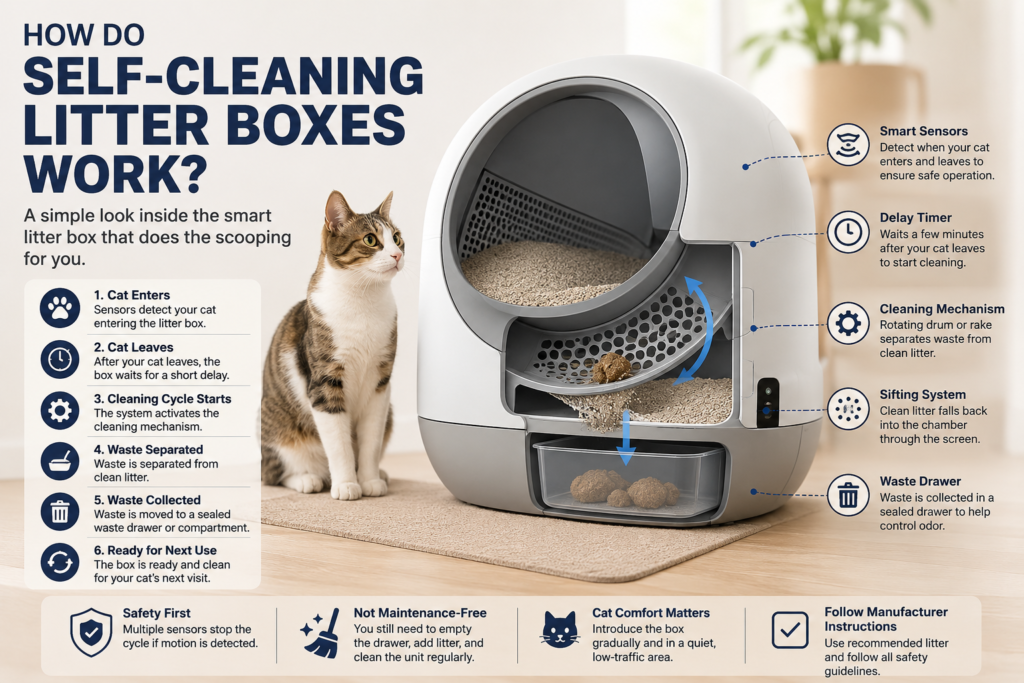
- Your cat uses the litter box.
- Sensors detect the cat’s presence.
- The unit waits after the cat leaves.
- An automated cleaning mechanism starts.
- Waste is separated from usable litter.
- The waste is moved into a separate compartment or disposal system.
- The litter area is left ready for the cat’s next visit.
The delay before cleaning serves an important purpose. With systems that use clumping litter, it can give the litter time to form a more solid clump before separation. More importantly, the cleaning cycle should not begin while the cat is still using the box.
The exact sequence, delay, and cleaning method depend on the individual model.
What Tells the Litter Box When to Clean?
Automatic litter boxes use sensors to determine when it is appropriate to start a cleaning cycle.
Depending on the model, these may include:
- Weight sensors that detect a cat’s presence in the unit
- Motion or presence sensors that detect activity around the litter area
- Infrared or similar sensors that monitor the entrance or interior
- Additional safety sensors designed to interrupt a cleaning cycle when movement or a cat is detected
After the cat leaves, the machine generally waits before beginning its cleaning cycle.
Some models combine multiple sensor systems rather than relying on a single method.
Because sensor designs and safety requirements vary, always follow the manufacturer’s instructions—particularly regarding kittens, minimum cat weight, automatic-mode operation, and safe setup.
The Main Types of Self-Cleaning Litter Boxes
Self-cleaning litter boxes all aim to reduce manual scooping, but they do not necessarily clean in the same way.
Rotating or Sifting Systems
In a rotating system, the litter chamber slowly moves during the cleaning cycle.
As it rotates, an internal screen or sifting mechanism separates clumps and solid waste from the usable litter. The waste then drops into a separate compartment, while the remaining litter returns to the main litter area.
Automatic Rake Systems
Rake-style litter boxes use a motorized rake that moves across the litter bed after the cat has left.
The rake collects or pushes waste toward a covered compartment or disposable tray while leaving usable litter behind.
Washable or Flushing Systems
Some specialized systems work differently from conventional automatic litter boxes.
Instead of simply storing collected waste, they may use reusable granules and a washing process to remove waste and clean the litter area. Depending on the design, these systems can require access to water and drainage as well as specific cleaning supplies.
Because these systems differ considerably from standard rotating or rake-style boxes, installation and maintenance requirements should always be checked before use.
Where Does the Waste Go?
With many rotating, sifting, and rake-style systems, collected waste is transferred into a separate drawer or compartment.
This compartment may use a liner, bag, or disposable tray and is often enclosed to help contain waste and odors.
It still needs to be checked and emptied.
How frequently you need to empty it depends on factors such as:
- The waste compartment’s capacity
- The number of cats using the box
- How frequently the cats use it
- The design of the particular litter box
Specialized washing or flushing systems may dispose of waste differently, so their maintenance requirements can be quite different.
Do Self-Cleaning Litter Boxes Need Special Litter?
Some do.
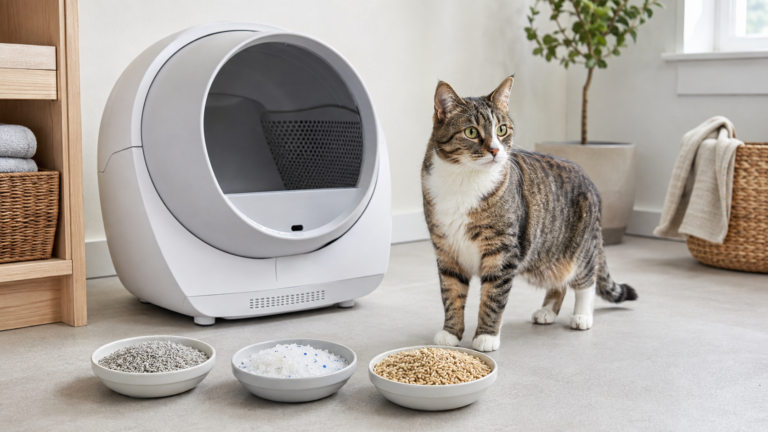
The correct litter depends on how the particular cleaning mechanism is designed. One model may work with clumping litter, while another may require crystals, pellets, reusable granules, or another manufacturer-approved material.
Using an unsuitable litter may prevent waste from separating correctly and, in some designs, could interfere with the cleaning mechanism.
For first-time owners, the safest rule is simple:
Check the manufacturer’s litter requirements before filling an automatic litter box.
Do not assume that the litter you already use in a traditional box will automatically be suitable.
Are Self-Cleaning Litter Boxes Completely Automatic?
Not quite. Self-cleaning litter boxes reduce routine scooping, but they still require regular owner involvement.
“Self-cleaning” mainly describes the automated removal or separation of waste. It does not mean that the litter box never needs attention from its owner.
You will still need to:
- Empty the waste drawer or compartment
- Refill or replace litter when necessary
- Clean interior surfaces
- Check sensors and moving components
- Replace liners, filters, trays, or other consumable parts when required
- Watch for jams, unusual odors, or error messages
A better way to think about these devices is that they reduce routine scooping rather than eliminate litter-box maintenance.
What Happens If a Cat Comes Back During Cleaning?
Safety is one of the most important considerations with any motorized litter box.
Automatic models may use weight, motion, infrared, or other sensors designed to stop, pause, or prevent movement when a cat is detected.
However, safety systems are not identical across all products. You should never assume that every automatic litter box responds in exactly the same way.
Follow the manufacturer’s instructions for safe operation and pay particular attention to minimum weight or age recommendations.
What About Kittens?
Kittens deserve extra attention because very small cats may not meet the minimum weight requirements specified for some automatic systems.
If the manufacturer recommends that automatic operation should not be used below a certain weight or age, follow that guidance.
When introducing any automatic litter box, supervising your cat during the adjustment period is also a sensible precaution.
Will My Cat Automatically Use a Self-Cleaning Litter Box?
Not necessarily.
Some cats adapt quickly, while others may be cautious about a different shape, unfamiliar entrance, mechanical noise, or movement. Cats can develop preferences for their litter box, litter type, and location, so changes to their setup are best approached carefully.
A gradual introduction can make the transition easier.
For example, you can initially place the automatic litter box near your cat’s existing litter box and allow the cat to investigate it without pressure.
Where the manufacturer’s instructions allow it, keeping the automatic cleaning function turned off during the initial introduction may help a cautious cat become familiar with the box before experiencing its movement or sound.
Avoid forcing a frightened cat into the new litter box. The goal is to help the cat associate it with a normal, comfortable place to eliminate.
Why Do Cat Owners Use Self-Cleaning Litter Boxes?
The main benefit is convenience.
Automatically removing waste can reduce the amount of manual scooping required and help keep the litter surface cleaner between maintenance sessions.
Depending on the model, other conveniences may include:
- Enclosed waste storage
- Waste-drawer alerts
- Cleaning-cycle records
- App notifications
- Litter or waste-level information
- Usage tracking
These features are not standard across all automatic litter boxes, so check the specifications of the individual model rather than assuming every “smart” litter box offers the same functions.
Usage information can also help owners notice changes in litter-box habits, but app data should not be treated as a veterinary diagnosis. If you notice a significant or concerning change in your cat’s urination, defecation, appetite, behavior, or general health, contact a veterinarian.
Common Mistakes to Avoid
Using the Wrong Litter
Automatic systems may be designed around particular litter types. Always check compatibility before changing or adding litter.
Switching Too Quickly
Removing your cat’s familiar litter box immediately may make the transition more difficult. Give a cautious cat time to investigate the new setup.
Ignoring the Waste Drawer
Automatic waste removal does not mean unlimited waste storage. Check the drawer or compartment regularly.
Assuming the Machine Is Maintenance-Free
Sensors, moving parts, screens, and interior surfaces can still become dirty or obstructed.
Ignoring Manufacturer Safety Instructions
Pay particular attention to recommendations concerning kittens, minimum weight, placement, litter type, cleaning, and automatic operation.
Do Self-Cleaning Litter Boxes Still Need Regular Cleaning?
Yes.
Waste residue, litter dust, hair, and small particles can accumulate around the litter area, sensors, screens, rakes, or other components.
Regular cleaning helps keep the unit hygienic and operating as intended.
Always follow the manufacturer’s cleaning instructions. Avoid immersing electrical components in water or using cleaning products that are not suitable for the unit.
Frequently Asked Questions
Do self-cleaning litter boxes eliminate odor?
No litter box can guarantee an odor-free home. Moving waste into an enclosed compartment may help contain odors, but regular waste disposal and cleaning are still necessary.
Are self-cleaning litter boxes safe for kittens?
It depends on the model and the kitten’s size or weight. Some manufacturers specify minimum requirements for automatic operation. Always check the instructions for the particular unit before allowing a kitten to use it in automatic mode.
Can I use any cat litter in an automatic litter box?
No. Litter compatibility varies between systems. Use the litter type recommended by the manufacturer to help the cleaning mechanism operate correctly.
What happens if the power goes out?
A powered litter box will generally be unable to perform its normal automatic cleaning cycle without electricity. What happens when power returns can vary by model, so check the manufacturer’s instructions. The box should still be inspected manually rather than assuming cleaning has resumed normally.
Does a self-cleaning litter box mean I never have to scoop again?
It can greatly reduce routine hand-scooping, but owners still need to monitor the box, empty collected waste, maintain the litter level, and clean the unit.
Final Recap
So, how do self-cleaning litter boxes work?
They use sensors to determine when a cat has used the litter box and an automated mechanism to separate or remove waste after the cat leaves. Depending on the design, that mechanism may involve rotating, sifting, raking, or a specialized washing process.
The biggest misconception is that “self-cleaning” means “maintenance-free.” It doesn’t. Owners still need to empty waste, replenish the appropriate litter, clean the unit, and make sure its sensors and moving parts are working correctly.
If you’re considering an automatic litter box for your cat, our guide to the best self-cleaning litter boxes explores different options and features in more detail.
For first-time cat owners, understanding these basics makes it easier to decide whether an automatic litter box fits your cat, your home, and the amount of maintenance you’re comfortable handling.