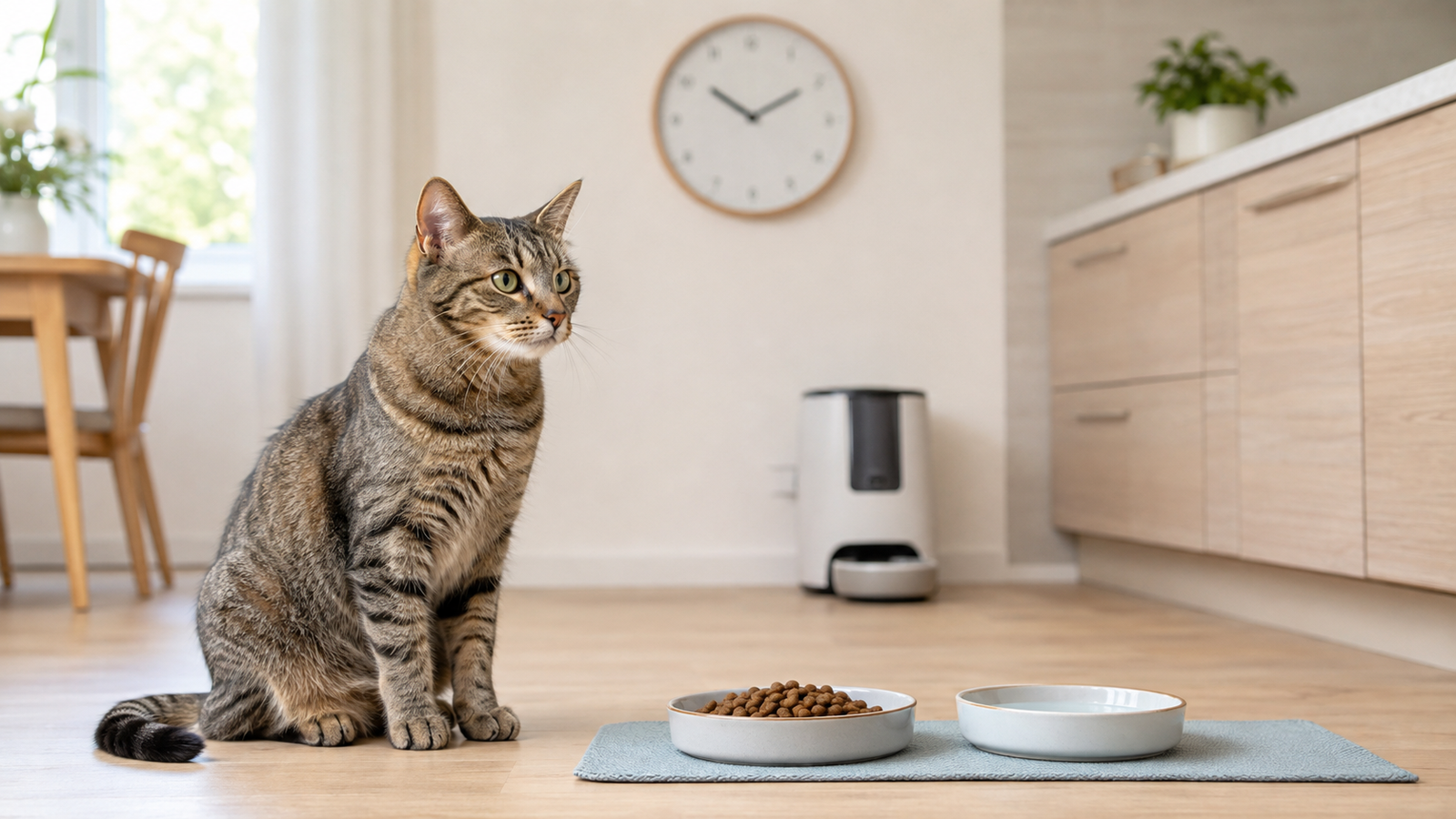
The right cat feeding schedule depends on age, health, appetite, body condition, and food type. This guide explains how many times a day cats should eat, provides sample meal times, and shows how to divide daily food into manageable portions.
How often should you feed a cat? For many healthy adults, two measured meals daily provide a practical starting point. Kittens need more frequent meals, while healthy senior cats can often continue their established routine.
Quick Answer: How Many Times a Day Should You Feed a Cat?
Most healthy adult cats do well with two measured meals daily. Kittens generally need three meals a day until about six months, then often transition to twice daily. Healthy senior cats can usually maintain their established routine. Some cats benefit from smaller, more frequent meals. Divide the appropriate daily food allowance rather than adding extra food.
Key Takeaways
- Adult cats: Two measured meals daily are a sensible starting point for many healthy adults.
- Kittens: Younger kittens need more frequent meals, with frequency usually decreasing as they mature.
- Daily portions: Determine the appropriate daily food allowance before dividing it among meals.
- Feeding methods: Scheduled meals simplify appetite monitoring; measured grazing may suit some cats.
- Health and safety: Persistent appetite changes, unexplained weight loss, or refusal to eat require veterinary attention.
Why Feeding Frequency Matters
A consistent feeding routine helps owners monitor food intake, recognize appetite changes, and maintain predictable meal times. Scheduled meals make it easier to notice missed meals, measure portions, coordinate wet and dry food, and manage feeding competition between cats.
Cats naturally tend to consume several small meals. The peer-reviewed review Feeding Cats for Optimal Mental and Behavioral Well-Being discusses feline feeding behavior and food-seeking opportunities. This does not mean every cat needs the same number of daily meals.
Feeding Enrichment and Puzzle Feeders
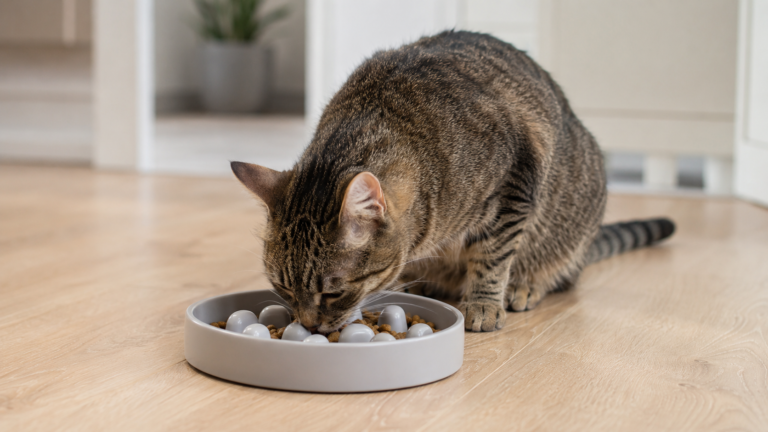
Puzzle feeders, food-dispensing toys, and suitable slow-feeder cat bowls can provide enrichment during mealtimes. Introduce them gradually, and make sure the cat can still obtain its full intended allowance.
Cat Feeding Frequency by Life Stage
Age is a useful starting point, but health, growth, body condition, and food type also matter.
| Life stage | Suggested starting frequency | Important considerations |
|---|---|---|
| Nursing or weaning kitten | Frequent, age-specific feeding | Orphaned and unweaned kittens need veterinary instructions |
| Kitten under 4 months | Often 3–4 small meals daily | Rapid growth and small meal capacity |
| Kitten 4–6 months | About 3 meals daily | Monitor growth and body condition |
| Kitten 6–12 months | About 2 meals daily | Continue growth-stage nutrition |
| Healthy adult | Usually 2 measured meals daily | Some cats suit different schedules |
| Healthy senior (around 10+ years) | Often the established adult routine | Adjust for appetite, health, and medication needs |
General guidance: Cornell Feline Health Center and VCA Animal Hospitals. Age ranges are practical planning categories, not rigid veterinary prescriptions.
How Often Should You Feed a Kitten?
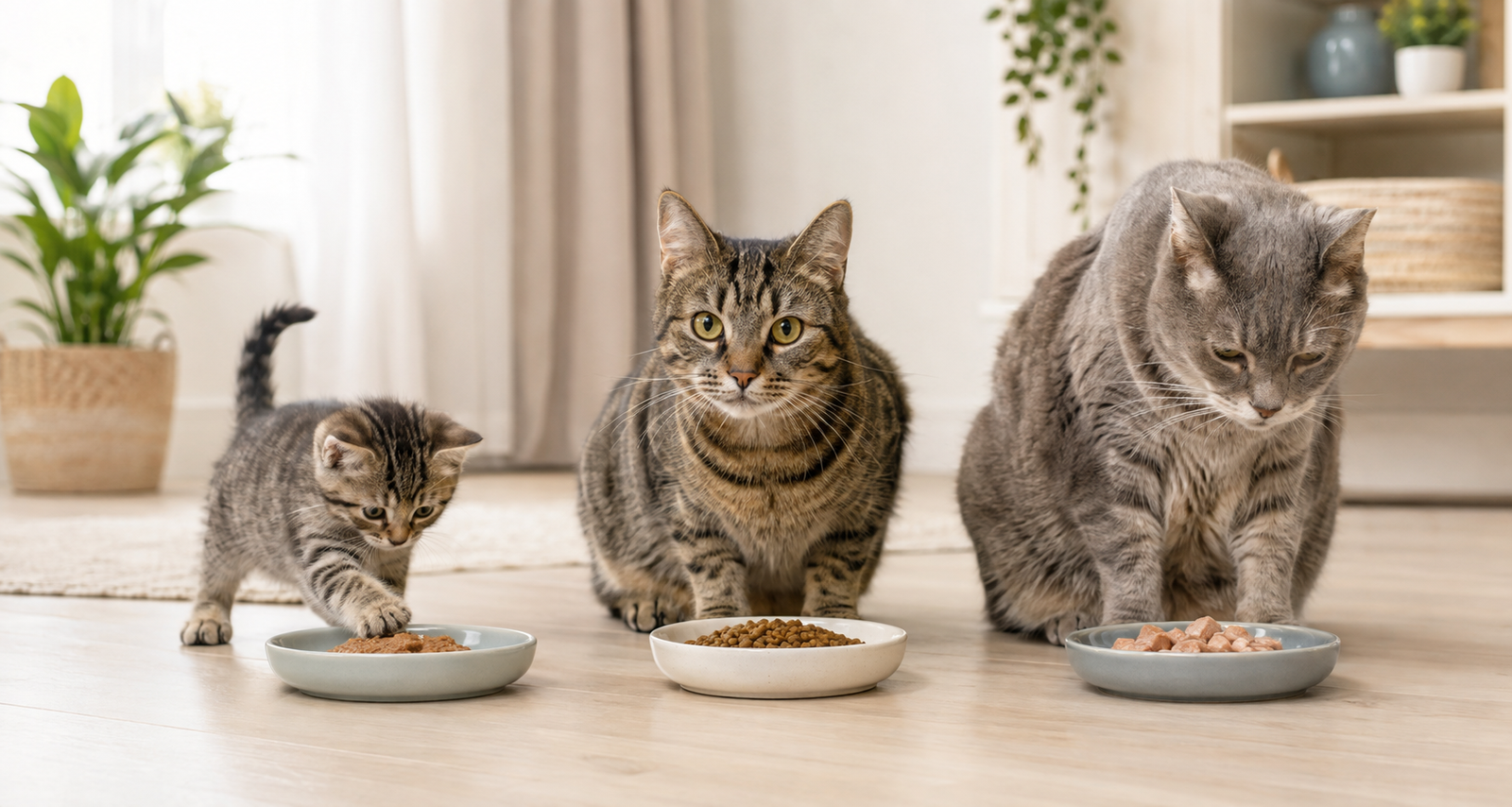
Kittens need sufficient energy and nutrients for growth. Cornell recommends three meals daily until approximately six months of age, followed by twice-daily feeding from six months to one year. Younger kittens eating solid food may benefit from three or four smaller meals.
Very young nursing, orphaned, underweight, or unwell kittens require individualized veterinary guidance. Their feeding frequency and technique differ from those of older kittens.
How Often Should You Feed an Adult Cat?
Two measured meals daily work well for many healthy adult cats. VCA notes that three or four smaller meals may help cats that eat small quantities at once or beg between meals. Begging alone does not prove a cat needs additional calories.
How Often Should You Feed an Indoor Cat?
Indoor cats do not automatically need a different meal frequency. The appropriate daily allowance depends on age, body condition, activity, and health. Weight management requires an appropriate overall feeding plan, not simply more frequent meals.
How Often Should You Feed a Senior Cat?
Healthy senior cats can often maintain their adult feeding routine. Dental discomfort, arthritis, kidney disease, diabetes, or medication requirements may call for adjustments. Seek veterinary advice for unexplained weight loss, difficulty eating, or persistent appetite changes.
Scheduled Meals vs. Free Feeding: Which Is Better for Cats?
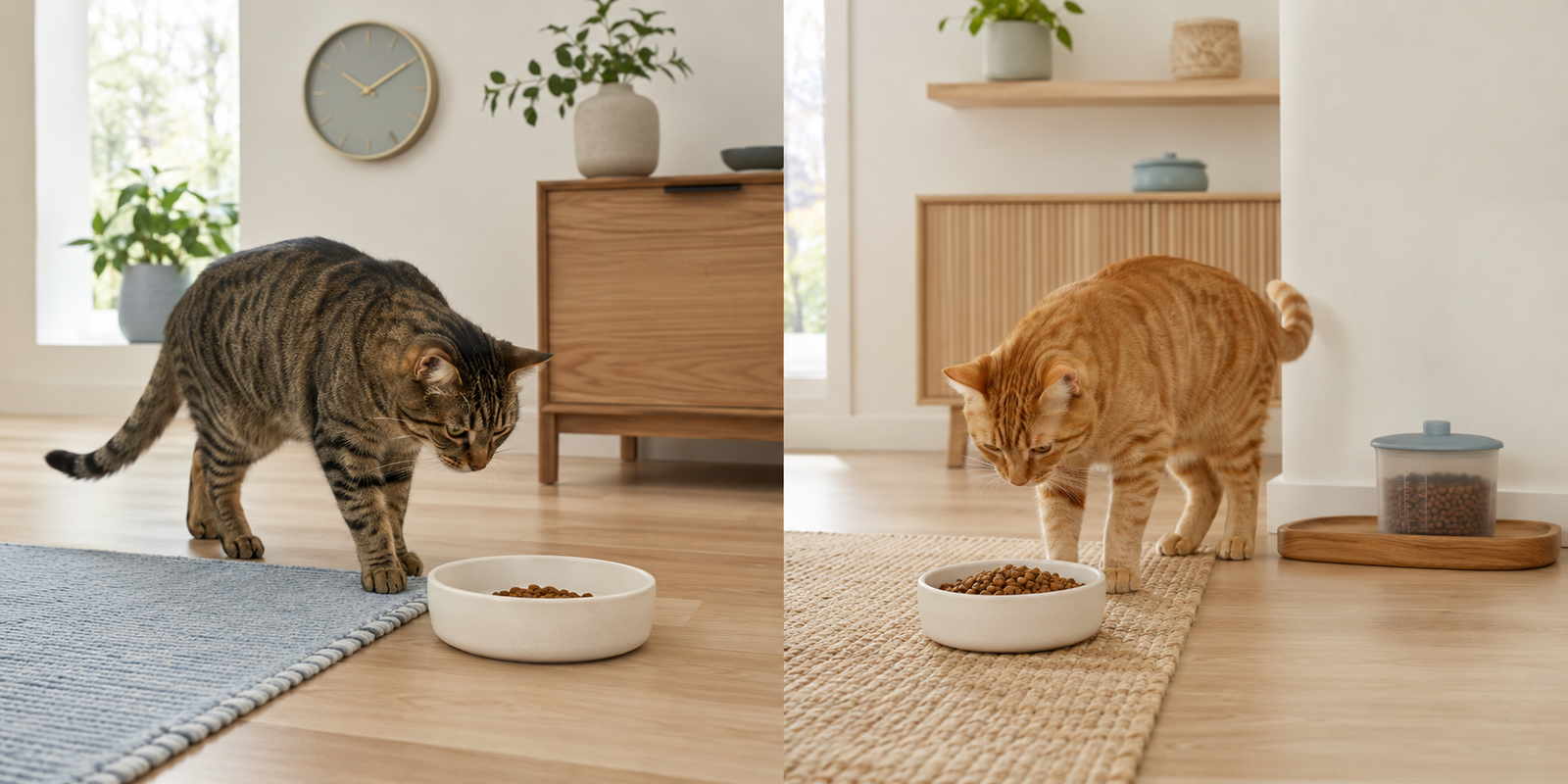
Scheduled feeding offers measured food at planned times. Free feeding leaves food available during the day; measured grazing limits this to a predetermined daily quantity.
| Consideration | Scheduled meals | Measured grazing |
|---|---|---|
| Appetite monitoring | Easier to notice missed meals | Changes may be harder to detect |
| Portion control | Straightforward | Possible with a measured allowance |
| Multiple cats | Individual intake easier to monitor | Food sharing can obscure intake |
| Wet food | Suitable for timed serving | Limited by food-safety requirements |
| Convenience | Requires regular serving | Allows flexible eating |
Some cats manage measured grazing well; others overeat. Choose a method that supports appropriate intake and makes changes in appetite detectable.
Does Food Type Change the Feeding Schedule?
Food type affects handling and storage, but it does not create one universal feeding frequency.
How Often Should You Feed Wet Food?
Wet food can be served in two or more measured meals. Follow the manufacturer’s refrigeration, serving, and leftover-disposal instructions. For automated meals, use a feeder specifically designed for wet food and follow its cooling limits. See our wet-food automatic feeder guide.
How Often Should You Feed Dry Food?
Dry food can be served in scheduled meals or through measured grazing. Different recipes have different calorie densities, and automatic feeder portions can vary with kibble size and shape.
Mixed Wet and Dry Feeding
When combining wet and dry food, count the calories from both toward the complete daily plan. A dry-food feeder should not become an unmeasured extra source of food.
Fresh Water and Hydration
Provide clean, fresh drinking water at all times. Cats eating mainly dry food obtain less moisture from food than cats eating wet diets. Additional water bowls or a suitable fountain may improve access to drinking water, but require regular cleaning.
How to Create a Cat Feeding Schedule That Works
1. Establish the Daily Food Allowance
Use the specific food’s feeding guidance as a starting point, considering age, body condition, and veterinary advice.
2. Choose the Number of Meals
For many healthy adults, two daily meals are practical. Some cats benefit from additional smaller meals.
3. Select Consistent Times
Choose times you can maintain, manually or with a tested automatic feeder.
4. Divide the Daily Food
Distribute the established daily allowance among the selected meals.
5. Account for Every Food Source
Include wet food, dry food, treats, food-dispensing toys, and food given by other household members.
6. Monitor and Adjust
Observe appetite, weight, body condition, and changes in eating behavior. Reassess the plan as circumstances change.
Example Cat Feeding Schedules
Consistent feeding times are generally more important than a universally perfect clock time. VCA explains that hunger signals can begin after approximately 8–10 hours without food, supporting the common recommendation of at least two daily meals.
| Meals per day | Example feeding times | Possible use |
|---|---|---|
| 2 | 7:00 AM and 7:00 PM | Many healthy adults |
| 3 | 7:00 AM, 1:00 PM and 7:00 PM | Cats preferring smaller meals |
| 4 | 7:00 AM, 12:00 PM, 5:00 PM and 10:00 PM | Smaller scheduled portions |
| Mixed feeding | Wet food morning/evening; measured dry food midday | Cats receiving both food types |
These are example times, not required medical intervals. Follow veterinary instructions when a cat needs a medically prescribed schedule.
How Much Food Should You Give at Each Meal?
Determine the appropriate total daily allowance before dividing it among meals. For example, if a cat’s established allowance is 60 grams of a particular dry food per day, the following is the arithmetic:
| Meals daily | Food per meal | Daily total |
|---|---|---|
| 2 | 30 g | 60 g |
| 3 | 20 g | 60 g |
| 4 | 15 g | 60 g |
The 60-gram amount is a hypothetical calculation, not a recommended allowance. Foods differ in calorie density. Check the product’s kcal information and monitor body condition with veterinary guidance as needed.
Do Treats Count Toward Daily Calories?
Yes. Treats and rewards contribute to daily calorie intake. The World Small Animal Veterinary Association’s treat guidance recommends that treats make up less than 10% of a cat’s daily calories.
Using an Automatic Feeder for Smaller Scheduled Meals
An automatic feeder can help deliver scheduled portions while an owner is busy, working, or asleep. It does not determine the cat’s nutritional requirements.
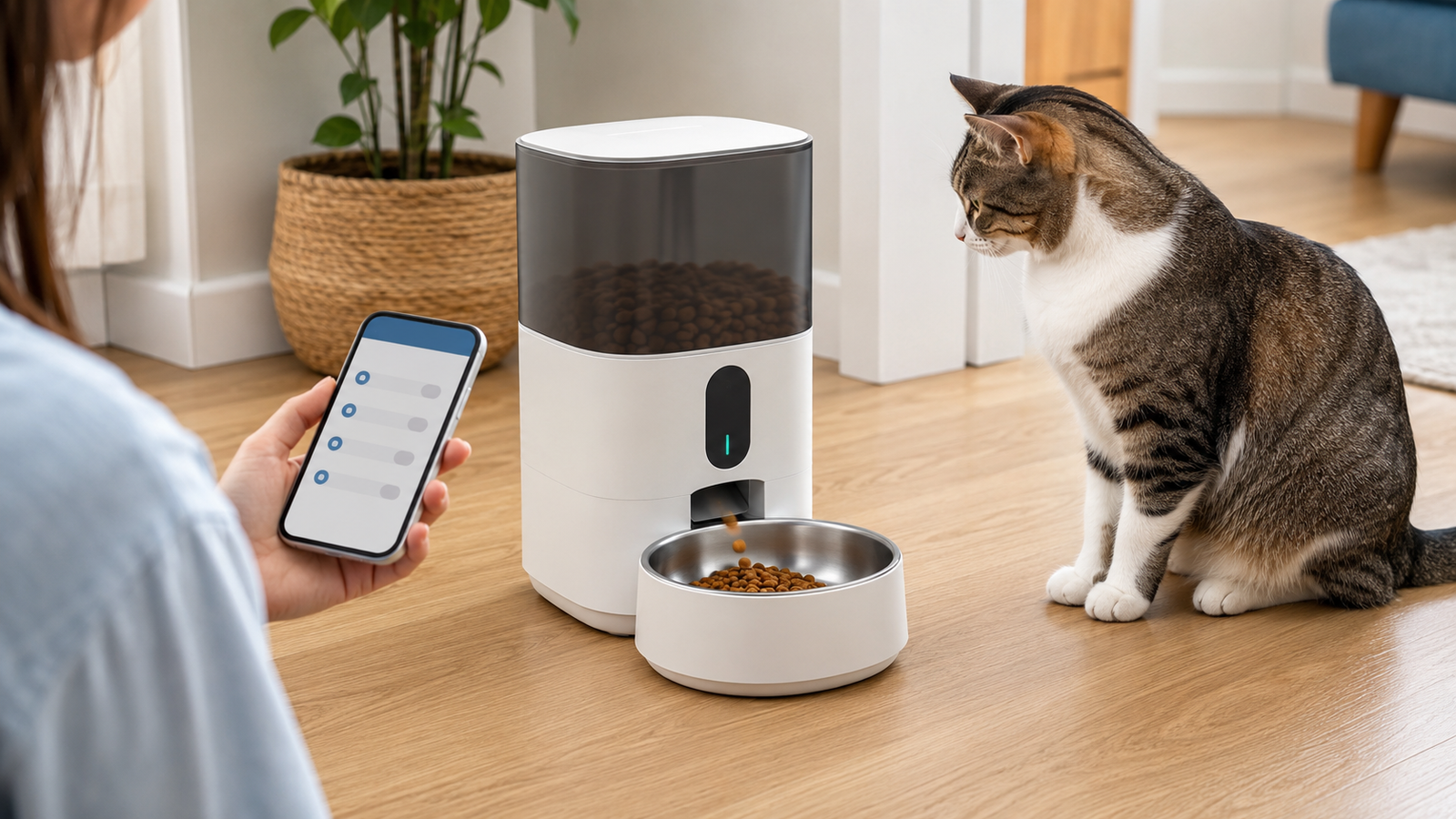
Before relying on a feeder, confirm the daily allowance, weigh test portions, verify the programmed times, and observe several complete feeding cycles. Continue checking whether the intended cat actually eats.
For step-by-step instructions, read our automatic pet feeder schedule guide and portion accuracy guide.
Feeding Multiple Cats on Different Schedules
When several cats share a home, one may eat quickly while another grazes. A shared bowl can make individual intake difficult to assess.
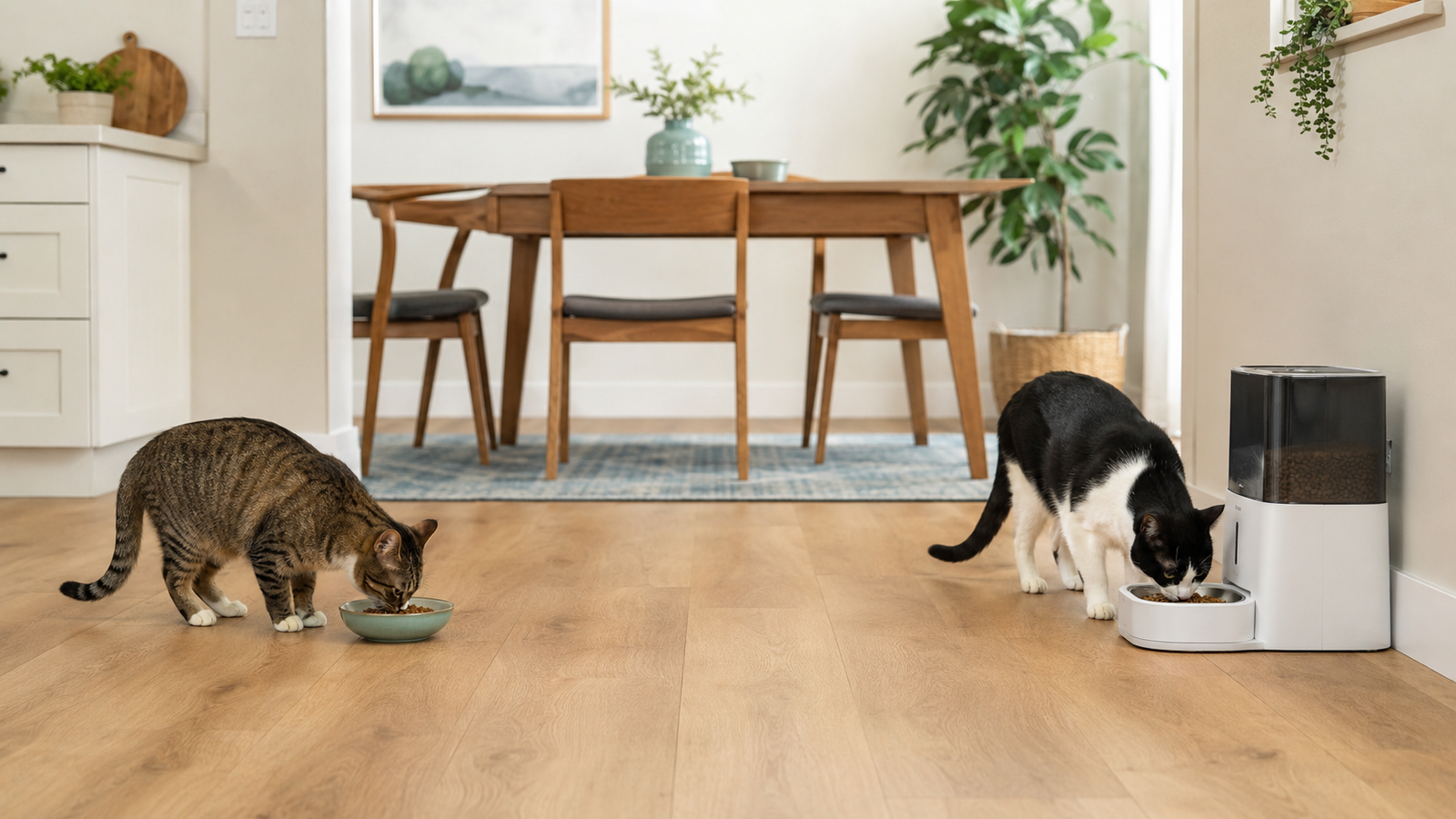
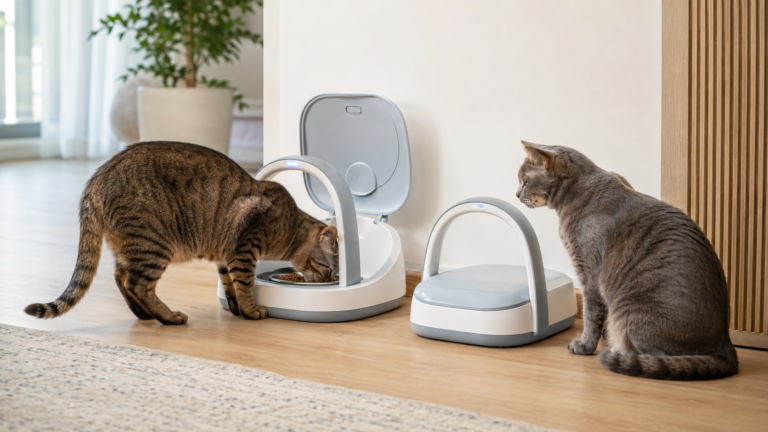
Separate feeding rooms, supervised meals, or controlled-access feeders may help. Microchip or RFID-controlled feeders can restrict access to certain bowls, but not all provide timed dispensing.
See microchip feeders for cats and automatic feeders for multiple cats. Continue monitoring each cat’s appetite and body condition.
When a Standard Schedule May Not Be Appropriate
Seek individualized veterinary guidance for cats that are very young, pregnant, nursing, underweight, overweight, diabetic, recovering from illness, taking medication with food, or living with kidney, digestive, or dental disease.
Important: What If Your Cat Stops Eating?
Contact a veterinarian promptly if your cat refuses food. Cornell warns that loss of appetite can seriously affect an adult cat within as little as 24 hours; very young kittens may become ill much sooner. If an adult cat has eaten nothing for 24 hours, seek veterinary assessment without further delay. Seek help sooner for kittens, diabetic or sick cats, or any cat with vomiting, lethargy, weakness, or other concerning signs.
Prolonged inadequate food intake can contribute to hepatic lipidosis, a potentially life-threatening liver condition, particularly in overweight cats. See Cornell’s guidance on anorexia in cats.
Common Feeding-Schedule Mistakes
Adding Meals Without Adjusting Portions
More meals should not automatically mean more food.
Leaving Unlimited Food Available
Repeatedly topping up bowls makes intake difficult to measure.
Ignoring Treats and Mixed Feeding
All foods contribute to the total daily intake.
Assuming Every Food Has the Same Calorie Density
Different recipes provide different amounts of energy per gram, cup, can, or pouch.
Using One Bowl for Several Cats
Shared bowls can obscure individual intake and create competition.
Assuming a Feeder Guarantees a Meal
A feeder can dispense successfully even if the cat does not eat. Continue daily observation.
Frequently Asked Questions
Is It Okay to Feed a Cat Once a Day?
Some healthy adult cats do well with once-daily feeding, although two meals remain a practical general recommendation. A 2020 study published in PLOS ONE compared once-daily and four-times-daily feeding in eight healthy adult cats. Some appetite-related findings favored once-daily feeding, but the study was small and does not establish the best schedule for every cat.
How Many Times a Day Should a Kitten Eat?
Cornell recommends three meals daily until about six months, followed by twice-daily feeding until one year. Very young or unwell kittens need individualized guidance.
How Often Should I Feed My Cat Dry Food?
Many healthy adult cats can receive dry food in two measured meals. Smaller, more frequent meals or measured grazing may also suit some cats.
How Often Should I Feed My Cat Wet Food?
Wet food can be served in two or more measured meals. Follow the manufacturer’s instructions for storage and discarding leftovers.
Should I Feed My Cat Before Bed?
An evening meal can fit a cat’s established schedule, but feeding immediately before bedtime is not necessary for every cat.
Is Free Feeding Bad for Indoor Cats?
Not always. Measured grazing can work for some cats, but unrestricted refilling makes intake and appetite harder to monitor.
How Often Should I Feed an Overweight Cat?
An overweight cat needs an appropriate veterinary weight-management plan. Changing meal frequency alone does not ensure weight loss.
Why Is My Cat Always Hungry?
Begging can reflect learned behavior, anticipation, or inadequate intake. Persistent increased hunger, especially with weight loss or increased thirst, needs veterinary assessment.
How Long Can a Cat Go Without Food?
Do not deliberately wait to find out. Contact a veterinarian promptly if your cat refuses food. An adult cat that has eaten nothing for 24 hours needs veterinary assessment, and vulnerable cats may need help much sooner.
Can an Automatic Feeder Replace Manual Feeding?
It can dispense scheduled portions but cannot replace observation, fresh water, cleaning, or veterinary care.
Final Thoughts
For many healthy adult cats, two measured meals daily provide a practical starting point. Kittens need more frequent feeding, while healthy seniors can often maintain their established routine.
The best schedule combines an appropriate daily allowance, consistent timing, safe food handling, and regular observation. Automatic feeders can help deliver meals, but owners must still check food intake and their cat’s health.
How We Researched This Guide
TopPetTech prepared this guide using published veterinary guidance and peer-reviewed research, including Cornell Feline Health Center, VCA Animal Hospitals, the World Small Animal Veterinary Association, and research in PLOS ONE. Example schedules and calculations are educational illustrations rather than prescriptions for an individual cat. This guide is not represented as veterinarian-reviewed.
References
- Cornell — How Often Should You Feed Your Cat?
- VCA — Feeding Times and Frequency for Your Cat
- Cornell — Feeding Your Cat
- Cornell — Anorexia
- Cornell — Hepatic Lipidosis
- WSAVA — Global Nutrition Guidelines
- WSAVA — Feeding Treats to Your Cat
- Feeding Cats for Optimal Mental and Behavioral Well-Being (2020)
- PLOS ONE — Once-daily vs. Four-times-daily Feeding (2020)