Date of last verification: August 28, 2026
Review basis: This research-based comparison uses current manufacturer product pages, official support documentation, and relevant veterinary research available in August 2026. TopPetTech has not conducted hands-on testing of these collars. Features, subscriptions, network support and availability can change, so verify the exact model and service plan before purchasing.
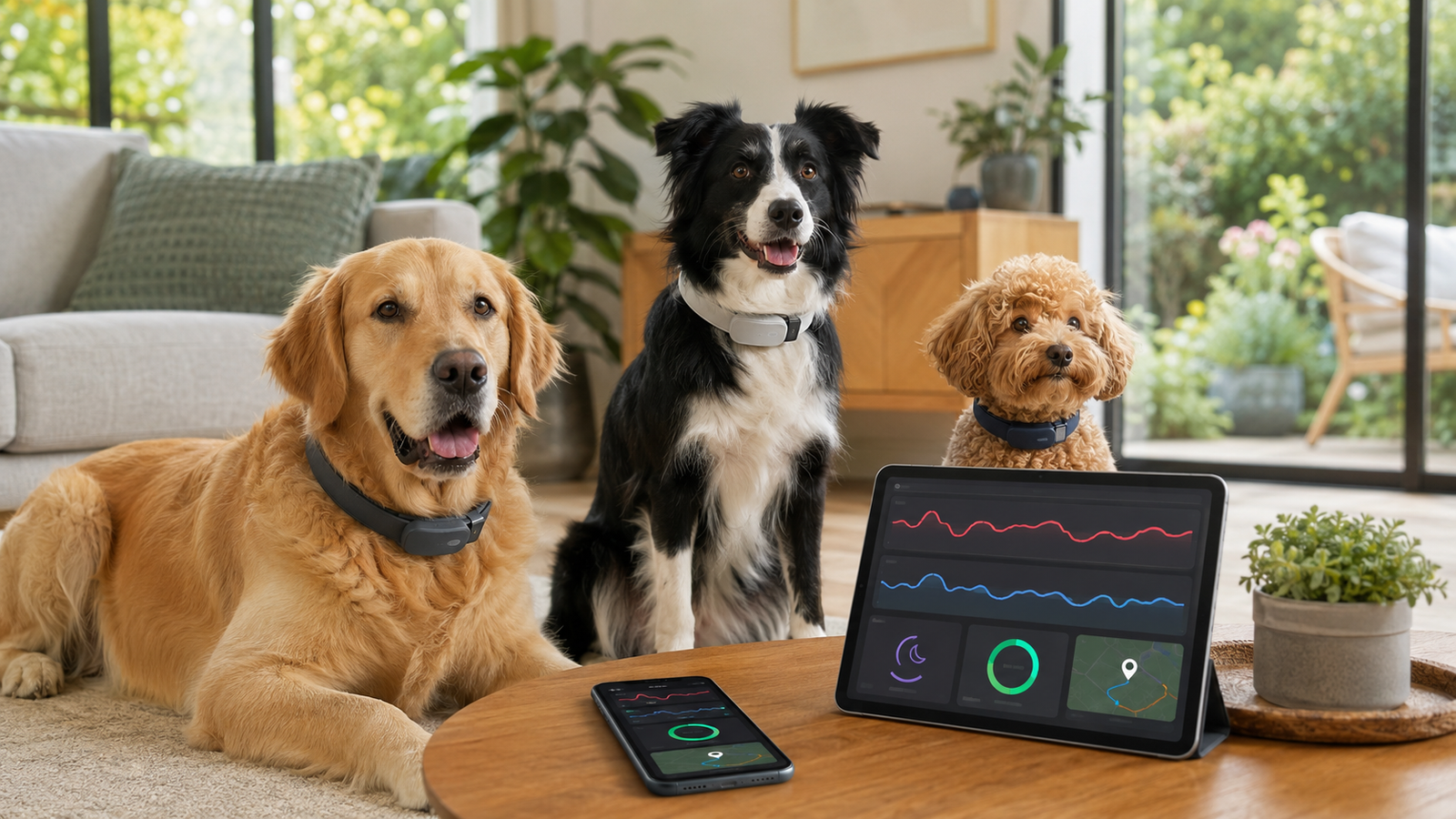
Dog health monitoring collars can record far more than steps. Depending on the device, they may track activity, sleep, behaviour, resting heart rate, heart-rate variability, respiratory rate, temperature trends and GPS location.
Those capabilities are not interchangeable. A collar that measures physiological signals is different from a GPS tracker that estimates activity from movement. Both may be useful, but neither can diagnose illness or replace examination by a veterinarian.
This guide explains what these wearables actually measure and compares four current systems according to their documented health features, location functions, battery arrangements, subscription requirements and limitations.
If location and escape recovery are your main priorities, start with our separate comparison of the best GPS trackers for dogs.
Quick Answer
Dog health monitoring collars may be worthwhile when you want consistent information about a dog’s activity, sleep or normal physiological patterns between veterinary visits. PetPace 3.0 provides the broadest vital-sign monitoring in this comparison. Tractive DOG 6 and DOG 6 XL combine GPS safety with resting heart-rate and respiratory-rate trends. Invoxia Biotracker combines a lightweight GPS device with cardiorespiratory and sleep monitoring. Fi Series 3+ concentrates on location, activity and behaviour patterns rather than measuring vital signs.
The value comes from recognising changes from the dog’s own baseline—not from treating an app alert as a diagnosis.
Key Takeaways
- “Health monitoring” may mean vital signs, activity patterns or behaviour detection, depending on the product.
- PetPace 3.0 and Invoxia Biotracker monitor more physiological signals than Fi Series 3+.
- Current Tractive DOG 6 models add resting heart rate and respiratory-rate trends to GPS and activity tracking.
- Fi Series 3+ monitors steps, sleep and several behaviours but does not measure heart rate, respiratory rate or temperature.
- Most connected collars require a paid plan for cellular data, cloud analysis or advanced app features.
- Fit, consistent wear, signal quality and battery state affect the usefulness of the data.
- A wearable should support—not replace—observation, preventive care and veterinary advice.
At a Glance
- Suitable for detailed vital-sign and behaviour monitoring: PetPace 3.0
- Suitable for GPS safety plus everyday wellness trends: Tractive DOG 6 / DOG 6 XL
- Suitable for lightweight cardiorespiratory and GPS monitoring: Invoxia Biotracker
- Suitable for long-battery GPS and behaviour-pattern tracking: Fi Series 3+
Quick Comparison Table
| Collar or tracker | What it monitors | GPS | Manufacturer battery claim | Subscription position | Important limitation |
|---|---|---|---|---|---|
| PetPace 3.0 | Pulse, HRV, respiration, temperature, activity, sleep, posture and other analysed trends | Yes | Approximately 4–6 weeks in standard transmission mode; much shorter in intensive mode | Required for connected services | Higher cost and more data than many healthy dogs need |
| Tractive DOG 6 / DOG 6 XL | Activity, sleep, resting heart rate, resting respiratory rate and supported behaviour trends | Yes | DOG 6: up to 14 days; DOG 6 XL: up to 6 weeks with Power Saving Zones | Required | Vitality readings need consistent wear and are wellness trends, not diagnoses |
| Invoxia Biotracker | Heart rate, HRV, resting respiratory rate, activity, behaviours and sleep | Yes | Up to 15 days | Some use without a mandatory plan; GPS and advanced services depend on the selected plan | Availability, network support and plan features vary by country |
| Fi Series 3+ | Steps, sleep, barking, licking, scratching, eating and drinking patterns | Yes | Up to 3 months under low-use conditions | Membership required for connected tracking and insights | Does not measure vital signs |
Battery duration is based on manufacturer estimates. Transmission frequency, GPS use, cellular coverage, saved Wi-Fi zones, temperature and the dog’s routine can reduce real-world runtime.
How We Selected and Verified These Collars
We reviewed current search results and specialist comparisons covering dog health monitors, activity trackers, GPS collars and pet wearables. A recurring problem was that some guides treated activity detection, physiological monitoring and GPS containment as equivalent “health” functions.
For this update, every included product needed a current official product or support page and a clearly distinct use in the comparison. We considered:
- Physiological signals measured directly or estimated during rest
- Activity, sleep and behaviour detection
- GPS, safe-zone and escape-alert functions
- Device weight, fit and size guidance
- Battery and charging arrangements
- Cellular, Wi-Fi and Bluetooth requirements
- Subscription and regional limitations
- Water- and dust-resistance information
- Availability of trend reports or sharing with a veterinarian
- Important limits on interpretation
Halo Collar 5 was considered but not retained for this comparison. Halo is primarily a GPS containment and training system with activity reporting, not a close substitute for a health-first wearable. The current Invoxia Biotracker, formerly marketed as Minitailz, is included instead because it directly monitors cardiorespiratory, activity and sleep data.
Retailer ratings and marketplace listings were not used as evidence of product quality or current specifications.
What Is a Dog Health Monitoring Collar?
A dog health monitoring collar is a wearable sensor system that records information while the dog follows its normal routine. Some devices replace the everyday collar, while others attach to an existing collar.
The collected data may include movement, rest, location, behaviour or physiological signals. A companion app converts those measurements into timelines, scores, trends or alerts.
The most useful comparison is with the dog’s own baseline. A sustained change in sleep, activity, resting breathing or another monitored pattern may justify closer observation. It does not explain why the change occurred.
Three Levels of Health Monitoring
1. Vital-Sign and Physiological Monitoring
These devices measure or estimate signals such as pulse, heart-rate variability, resting respiratory rate, or temperature. PetPace and Invoxia sit closest to this category, although their sensors, algorithms, and outputs differ.
Even a validated sensor has limitations. Fur, movement, collar position, fit and transmission settings can affect data. Consumer alerts should be discussed with a veterinarian rather than used to change treatment independently.
A dog heart-rate monitor built into a wearable may report resting heart rate or heart-rate trends rather than providing a continuous clinical reading on demand. Check exactly what the manufacturer measures, when the reading is collected and whether sufficient baseline data is required before interpreting changes. A wearable heart-rate trend should support observation and veterinary discussion, not be treated as a diagnosis by itself.
2. Wellness and Behaviour-Pattern Monitoring
Motion sensors and algorithms can estimate activity, sleep and behaviours such as scratching, licking, barking, eating or drinking. These patterns can provide context, especially when collected consistently.
They are not direct measurements of disease. A change may result from weather, schedule, travel, another animal, a loose collar or an app-classification error as well as a health concern.
3. GPS Safety With Health Features
Cellular GPS trackers calculate location and transmit it to an app. Manufacturers may add activity, sleep, behaviour or vitality trends to the same device.
This combination is convenient, but GPS accuracy and health-monitoring depth are separate considerations. A collar can be strong at escape alerts without providing advanced physiological measurements.
How the Sensors Work
Most dog wearables combine several technologies:
- Accelerometers and gyroscopes identify movement, rest, posture and repeated behaviour patterns.
- Optical, acoustic or other specialised sensors may estimate pulse, heart-rate variability or breathing trends on supported devices.
- Temperature sensors may track collar-area or body-temperature-related patterns, depending on product design.
- GPS and satellite positioning calculate outdoor location.
- Cellular, Wi-Fi and Bluetooth connections transfer data, save battery or connect the collar to an app.
- Algorithms compare new measurements with an individual baseline or a reference population.
Consistent wear matters. If a collar is removed every night, it cannot build a complete sleep or resting baseline. If it is loose, rotates frequently or sits incorrectly, some measurements may be less reliable.
1. PetPace 3.0 Smart Health Collar
Why It Stands Out
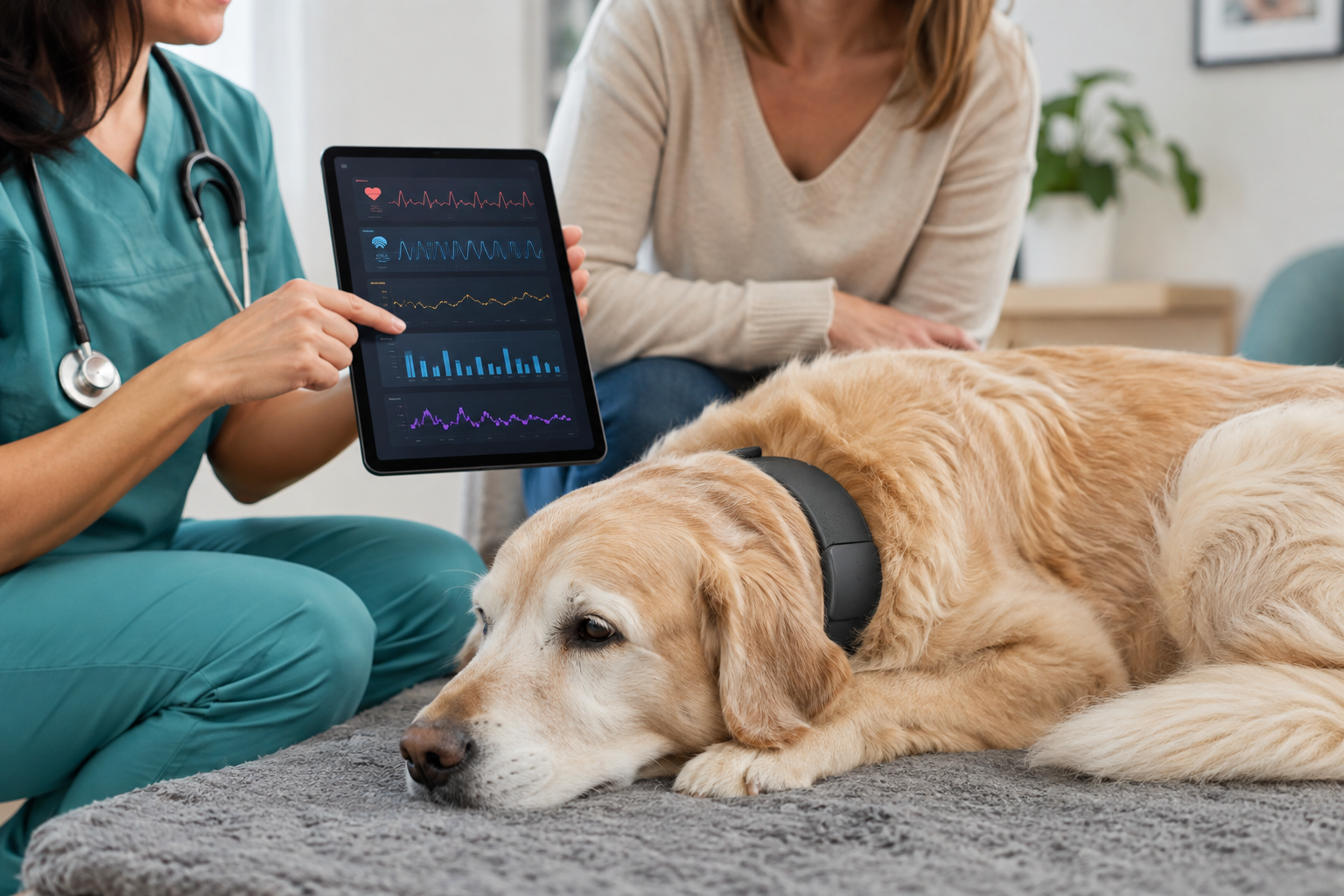
The PetPace 3.0 is the most health-focused system in this comparison. PetPace lists pulse, heart-rate variability, respiration, temperature or fever trends, activity, sleep and posture among its monitored signals and analysed outputs.
The platform also provides health alerts, reports that can be shared with a veterinarian, GPS and Safe Zone functions, and access to licensed-veterinarian telemedicine through eligible subscriptions. Its purpose is longitudinal monitoring rather than simple step counting.
Basic activity, sleep and GPS information begins appearing from the start. PetPace states that more advanced, personalised AI analytics unlock progressively during the first 12 weeks as the system learns the dog’s normal pulse, sleep and activity patterns. Owners should therefore expect the usefulness of the baseline-dependent insights to develop over time rather than appearing fully formed on the first day.
Published veterinary research involving PetPace has examined activity measurement and the collar’s ability to distinguish patterns associated with osteoarthritis pain. That does not mean every alert diagnoses a condition or that performance will be identical for every dog.
Suitable For
Senior dogs, dogs being monitored for an ongoing condition, recovery periods and owners who want detailed physiological information to discuss with their veterinarian.
Key Specifications
| Specification | Details |
| Current model | PetPace 3.0 |
| Monitored information | Pulse, HRV, respiration, temperature or fever trends, activity, sleep, posture and analysed wellness indicators |
| Positioning | GPS and Safe Zone functions |
| Connectivity | 4G LTE Cat-M1, 2.4 GHz Wi-Fi and Bluetooth Low Energy |
| Sizes | Small, medium and large |
| Device and collar weight | Approximately 60 g small, 90 g medium and 100 g large |
| Protection rating | IP66 and IP68 |
| Charging | Magnetic connection; approximately 2 hours for a full charge |
| Battery | About 4–6 weeks in standard mode, 2–3 weeks in rapid mode and 48–72 hours in intensive mode, according to current PetPace guidance |
| Subscription | Required for cellular data, GPS services, monitoring, alerts and included connected services |
| Current regional availability | United States, Canada and parts of Europe according to the official product page |
Advantages
- Broad range of physiological and behavioural measurements
- Individual baseline and alert system
- GPS and Safe Zone support
- Reports can be shared with a veterinarian
- Telemedicine access included with eligible subscriptions
- Several sizes
- Published veterinary research involving the PetPace platform
Limitations
- Higher device and subscription cost than basic activity trackers
- Battery varies dramatically with transmission frequency
- Advanced personalised analytics develop progressively during an approximately 12-week baseline period
- Heavier than lightweight clip-on trackers, especially in larger sizes
- Requires correct fit and consistent wear
- Large volume of data may create unnecessary worry if interpreted without context
- Alerts and scores do not diagnose disease
Editorial Assessment
PetPace 3.0 is the strongest fit when physiological monitoring is the main priority, and the owner is prepared to review trends with a veterinarian and allow time for personalised analytics to develop. It is less compelling for someone who only wants location tracking, basic exercise goals or a low-maintenance collar.
View the current PetPace 3.0 product information
2. Tractive DOG 6 and DOG 6 XL
Why They Stand Out
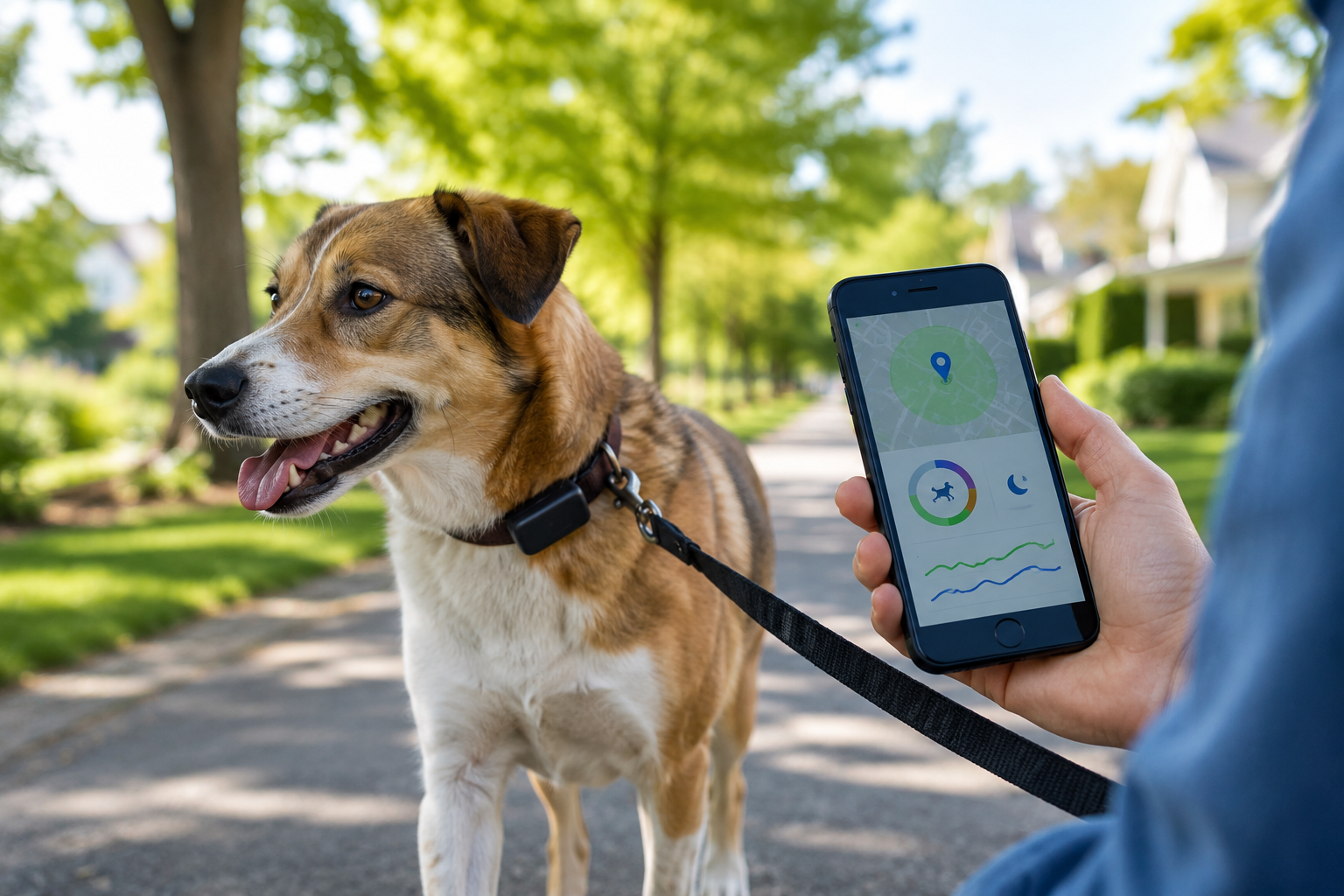
The current Tractive DOG 6 and DOG 6 XL combine live cellular GPS tracking with activity, sleep, resting heart rate, and resting respiratory rate monitoring.
DOG 6 is intended for dogs from 4 kg (8.8 lb). DOG 6 XL is the larger current model for dogs above 20 kg (44 lb). Tractive also supports Virtual Fences, escape alerts, location history and, on compatible dog models, behaviour features such as barking, scratching and separation-anxiety monitoring.
Tractive states that resting heart rate, respiratory rate, and some behaviour insights require enough consistent data before they appear. These are trend features rather than on-demand clinical readings.
Suitable For
Owners who primarily want escape alerts and live GPS but also value everyday activity, sleep and resting-vitality trends.
Key Specifications
| Specification | DOG 6 | DOG 6 XL |
| Size | 71 × 29 × 17 mm | 83 × 47 × 20 mm |
| Weight | 39 g | 70 g |
| Dog guidance | From 4 kg / 8.8 lb | Above 20 kg / 44 lb |
| Health features | Activity, sleep, resting heart rate, resting respiratory rate and supported dog-behaviour insights | Activity, sleep, resting heart rate, resting respiratory rate and supported dog-behaviour insights |
| Battery | Up to 14 days with Power Saving Zones | Up to 6 weeks with Power Saving Zones |
| Positioning and connectivity | GPS-based positioning, LTE/4G, Wi-Fi and Bluetooth | GPS-based positioning, LTE/4G, Wi-Fi and Bluetooth |
| Water protection | Waterproof design; verify the current rating for the exact market model | Waterproof design; verify the current rating for the exact market model |
| Charging | USB-C | USB-C |
| Subscription | Required | Required |
Advantages
- Live GPS, Virtual Fences and escape alerts
- Activity and sleep monitoring
- Resting heart-rate and respiratory-rate trends
- Two current sizes
- Longer battery claim for DOG 6 XL
- Behaviour monitoring on compatible dog models
- Location and wellness information in one app
Limitations
- Active subscription required
- Remote reporting depends on supported cellular coverage
- Power Saving Zone estimates may not reflect frequent live tracking
- Vitality features need consistent wear and sufficient baseline data
- DOG 6 XL is unsuitable for smaller dogs
- Health trends are not diagnostic measurements
Editorial Assessment
Tractive offers the most balanced option here for owners whose first priority is location safety but who also want useful wellness patterns. It does not provide the same breadth of physiological monitoring as PetPace, so the choice should depend on the problem being solved rather than the number of app features.
View the current Tractive DOG 6 and DOG 6 XL product information
3. Invoxia Biotracker
Why It Stands Out
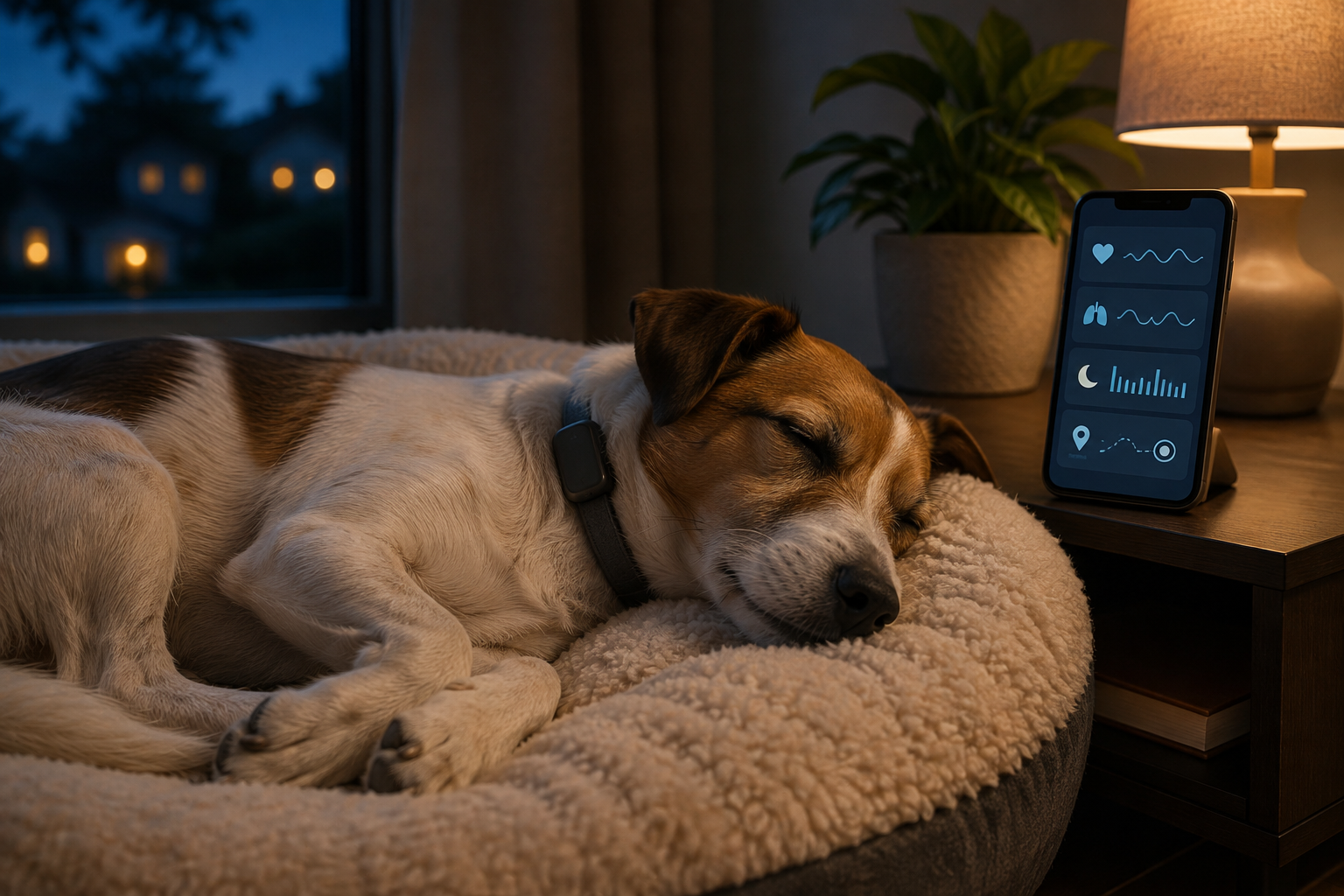
The Invoxia Biotracker, previously marketed as Minitailz, combines cardiorespiratory monitoring, activity and sleep analysis with cellular GPS tracking in a compact collar-mounted device.
Invoxia documents continuous resting heart-rate monitoring, heart-rate variability, resting respiratory-rate trends, sleep quality, activity and recognition of multiple everyday behaviours. Its app can generate alerts and reports based on the dog’s developing baseline.
The manufacturer also promotes heart-rhythm and atrial-fibrillation detection. These claims should be treated as screening information from the product’s own algorithms, not as a diagnosis. Any alert concerning heart rhythm or breathing warrants veterinary interpretation.
Suitable For
Owners who want a relatively light collar attachment combining physiological trends, sleep and activity information with GPS safety functions.
Key Specifications
| Specification | Details |
| Current name | Invoxia Biotracker; formerly Minitailz |
| Monitored information | Heart rate, HRV, resting respiratory rate, activity, behaviours and sleep quality |
| GPS | LTE-M cellular GPS, Live Tracking and safe-zone functions on supported plans |
| Dimensions | 59 × 30 × 23 mm |
| Weight | 37 g |
| Protection rating | IP67 |
| Battery | From several days up to 15 days, depending on settings and transmission use |
| Charging | Up to approximately 2 hours |
| Subscription | No mandatory plan for every use; GPS, alerts and advanced services vary by selected plan and country |
| Operating temperature | 0°C to 40°C according to current technical specifications |
Advantages
- Physiological, activity, behaviour and sleep information
- Relatively light collar-mounted design
- GPS and anti-escape features on supported plans
- Individual-baseline alerts
- Up to 15-day manufacturer battery claim
- Reports can be shared for veterinary discussion
- IP67 protection rating
Limitations
- Manufacturer health and rhythm claims require careful veterinary interpretation
- Cellular coverage and plan availability vary by country
- Highest GPS and connected functions may require a paid plan
- Battery falls with more frequent transmissions
- Collar placement and fit affect signal quality
- IP67 does not mean unlimited swimming or prolonged immersion
Editorial Assessment
Biotracker is a closer match to the article’s health-monitoring intent than the removed Halo containment collar. Its combination of low weight and cardiorespiratory monitoring is distinctive, but regional network support, plan features and the limits of algorithmic alerts must be checked before purchase.
View the current Invoxia Biotracker product information
4. Fi Series 3+ Smart Dog Collar
Why It Stands Out
The Fi Series 3+ is an integrated GPS collar built around long routine battery life, escape alerts and AI-assisted behaviour tracking.
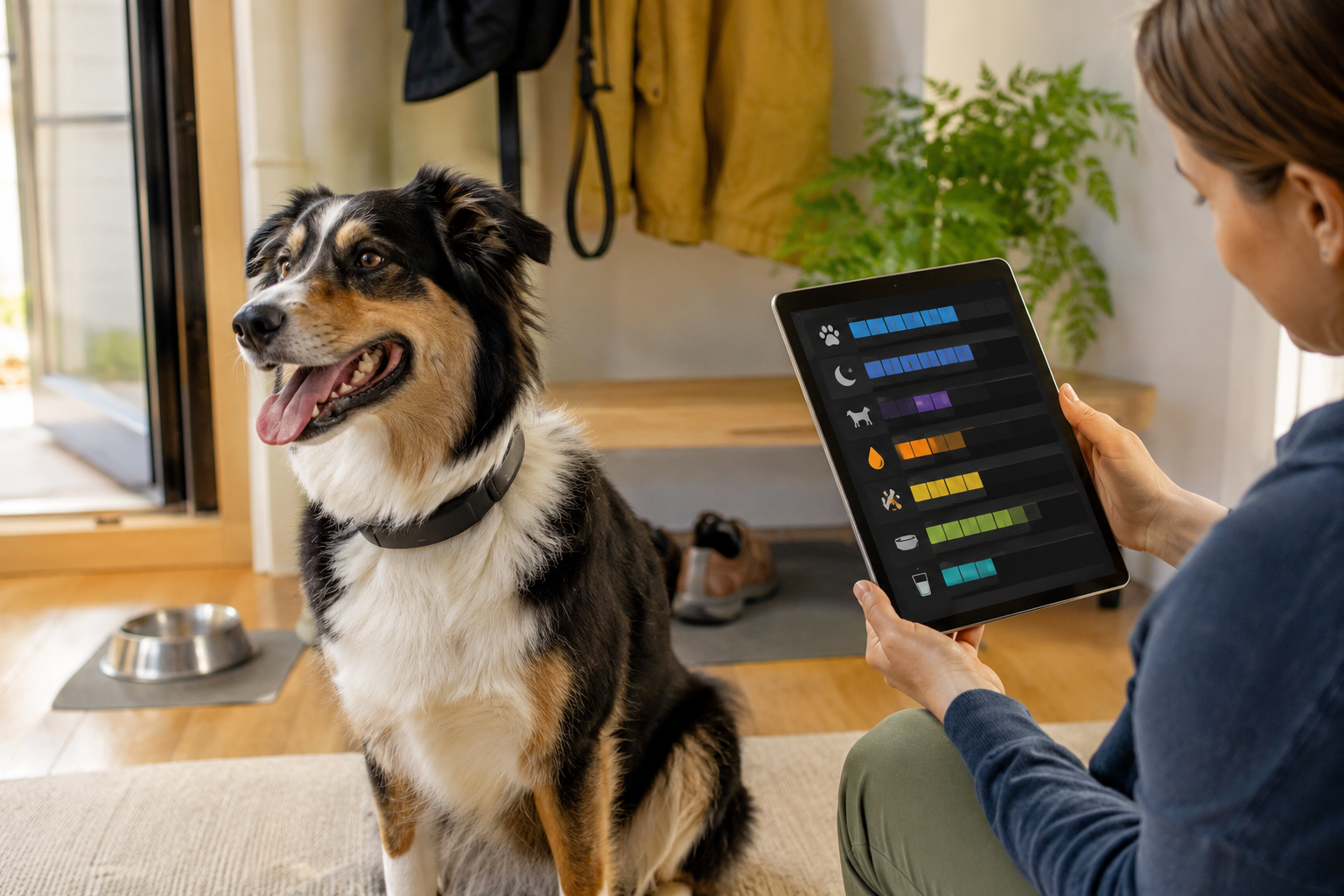
Fi’s current membership documentation lists steps, sleep, barking, licking, scratching, eating and drinking patterns. These features can help owners notice changes in routine, but Fi Series 3+ does not measure pulse, respiratory rate, HRV or temperature.
The distinction is important: Fi offers behaviour and wellness context, not vital-sign monitoring. Its GPS and escape-alert functions also depend on membership and supported cellular service.
Suitable For
Owners who want an integrated everyday GPS collar, long manufacturer battery claim and behaviour-pattern monitoring rather than physiological readings.
Key Specifications
| Specification | Details |
| Model | Fi Series 3+ |
| Monitored information | Steps, sleep, barking, licking, scratching, eating and drinking patterns |
| Vital signs | Not measured |
| Location features | GPS tracking, escape alerts and Lost Dog Mode |
| Connectivity | Cellular, Wi-Fi and Bluetooth |
| Device size | Approximately 81.5 × 30 × 11.5 mm |
| Device weight | Approximately 47 g |
| Battery | Up to 3 months under low-use conditions; shorter with frequent roaming or Lost Dog Mode |
| Water protection | IP68/IP66K according to current Fi documentation |
| Charging | Fi Base |
| Other features | Apple Watch integration and organised veterinary-record functions |
| Subscription | Fi Membership required for connected services |
| Regional support | Confirm current sales, cellular service and travel support for your country |
Advantages
- Integrated collar design
- Long manufacturer battery claim under low-use conditions
- GPS tracking and escape alerts
- Activity, sleep and several behaviour patterns
- Apple Watch integration
- Durable water- and dust-resistant construction
- Health-record organisation in the app
Limitations
- Does not measure heart rate, respiratory rate, HRV or temperature
- Membership required for connected tracking and insights
- Battery shortens with time away from the home base or frequent live tracking
- Cellular and service support vary by market
- Behaviour classifications may be imperfect
- App trends cannot explain the cause of a behaviour change
Editorial Assessment
Fi Series 3+ is most relevant when location, charging interval and behaviour trends matter more than vital signs. It should not be described as an equivalent alternative to PetPace for advanced physiological monitoring.
View the current Fi Series 3+ product information
How to Choose a Dog Health Monitoring Collar
Start With the Information You Actually Need
Choose physiological monitoring only if you are prepared to use the data responsibly. For a senior dog or a dog under veterinary supervision, pulse, respiratory, temperature, and posture trends may provide useful context. For a healthy escape-prone dog, a lighter GPS collar with activity tracking may be more practical.
If your main goal is to monitor exercise, rest, and everyday routines, a dog activity tracker may provide enough information without the additional physiological features of a health-focused collar. If you specifically want resting heart-rate, respiratory, temperature or other supported physiological trends, compare devices that document those measurements rather than assuming every activity tracker provides them.
Separate Direct Measurements From Inferences
Heart rate, temperature-related readings and respiratory trends are different from behaviours inferred through movement. Eating, drinking, scratching and sleep classifications can be helpful, but they remain algorithmic interpretations.
Check Fit, Weight and Wear Time
Compare the complete collar weight with the dog’s size and neck measurement. Check whether the sensor needs skin contact, a particular position or a certain tightness. Follow the manufacturer’s fit guidance and inspect the neck regularly for rubbing, hair loss or irritation.
Compare the Full Cost
Include the device, collar, subscription, cellular data, replacement straps and possible plan renewal. Do not select a multi-year subscription until you have checked comfort, coverage and the usefulness of the data during the return period.
Verify Regional Service
Confirm that the device, app, cellular service and support are available where you live and travel. A GPS chip can calculate position outdoors, but the device normally needs a supported network to transmit that position remotely.
Review Data and Privacy Controls
Location and health-pattern information can be sensitive. Review account security, household sharing, app permissions, retention policies and options for exporting or deleting data.
Ask Whether Your Veterinarian Can Use the Reports
A large dashboard is not automatically useful. Ask whether the device can export a clear timeline or PDF and whether your veterinarian is willing to review it. Record the time of symptoms, medication, exercise, travel and unusual events so trends have context.
Are Dog Health Monitoring Collars Worth It?
They may be worthwhile when three conditions are met:
- The device measures information relevant to the dog’s actual needs.
- The dog can wear it comfortably and consistently.
- The owner will interpret changes cautiously and involve a veterinarian when appropriate.
They are less likely to be worthwhile when the owner wants a diagnosis from an app, dislikes subscriptions, cannot maintain charging, has unreliable network coverage or only needs permanent identification.
An ordinary collar tag and a registered microchip remain essential. GPS and wellness wearables are removable electronic aids, not permanent identification.
Benefits and Realistic Limitations
Potential Benefits
- Creates a longer record than occasional observation
- May reveal sustained changes in activity, sleep or rest patterns
- Provides objective information to accompany owner observations
- Can support exercise and weight-management discussions
- GPS models can add escape alerts and location history
- Exportable reports may improve communication with a veterinary team
Important Limitations
- Consumer wearables cannot diagnose disease
- Sensor accuracy and algorithms vary by product and metric
- False alerts or misunderstood scores may create anxiety
- Missing data can result from charging, poor fit, or lost connectivity
- GPS and live modes shorten battery life
- Subscription costs continue after purchase
- Not every veterinary practice will interpret proprietary app scores
There is no single accuracy percentage that applies to dog health monitoring collars. Accuracy depends on the device, the metric being measured, and the conditions in which the collar is worn. Activity, sleep, heart-rate, respiratory and behaviour measurements should therefore be evaluated separately. Evidence validating one device or measurement should not be assumed to validate every feature on that collar—or other dog health trackers.
Texas A&M veterinary guidance notes that activity monitors can provide additional health-related information, but owners still need to consider the device’s limitations and their pet’s individual needs. Research into veterinary wearables is developing, and validation of one device or metric should not be generalised to every collar.
Safety and Setup Checklist
- Measure the dog’s neck and follow the exact fit instructions.
- Introduce the collar gradually and watch for discomfort.
- Inspect the skin and coat beneath the device.
- Confirm whether the collar is suitable for swimming before immersion.
- Charge it before the battery reaches a critical level.
- Wear it consistently during the baseline-learning period.
- Test GPS escape alerts while the dog is safely controlled.
- Record medication, travel, and routine changes that could affect data.
- Keep account passwords unique and review sharing permissions.
- Contact a veterinarian about persistent or concerning changes.
- Never change medication, exercise restriction or treatment solely because of an app alert.
If the collar reports an unusual change, first check that it is fitted and functioning correctly and consider whether exercise, travel, weather, medication or a change in routine could have affected the reading. Observe your dog directly and review whether the change persists rather than relying on one app alert. Save the relevant trend or report for your veterinarian, and seek veterinary advice promptly when the change is persistent, significant or accompanied by concerning symptoms.
If you need to observe behaviour while away from home, a smart pet camera can provide visual context that a collar cannot. For lower-cost additions to a connected pet-care setup, see our guide to smart pet technology under $100.
Frequently Asked Questions
Can a dog health monitoring collar detect illness?
It can detect or estimate changes in the signals it monitors, but it cannot determine the underlying cause. A persistent change may support a decision to seek veterinary advice; it is not a diagnosis.
What is the difference between a health collar and an activity tracker?
A health-focused collar may monitor physiological signals such as pulse, HRV, respiration or temperature. An activity tracker primarily uses movement sensors to estimate exercise, rest, sleep or behaviours. Some products combine both levels.
Do all dog health monitoring collars measure heart rate?
No. PetPace, current Tractive dog trackers and Invoxia Biotracker provide heart-related monitoring in different forms. Fi Series 3+ tracks activity and behaviours but does not measure heart rate.
Do these collars require subscriptions?
Most cellular and cloud-connected systems require a paid plan for some or all functions. PetPace, Tractive and Fi require subscriptions for their principal connected services. Invoxia’s available functions depend on the selected plan and region, even though the manufacturer advertises use without a mandatory subscription for every feature.
Which collar is suitable for a senior dog?
PetPace 3.0 may be relevant when detailed physiological trends are the priority. Suitability still depends on the dog’s size, comfort, diagnosis, monitoring plan and the veterinarian’s willingness to use the reports.
Which option has the longest battery life?
Fi Series 3+ has the longest maximum claim in this group—up to three months under low-use conditions. Tractive DOG 6 XL claims up to six weeks with Power Saving Zones. PetPace battery duration depends heavily on transmission mode, while Invoxia claims up to 15 days. These figures are not directly comparable because the devices collect and transmit different data.
Can a health collar replace regular veterinary checkups?
No. A wearable cannot perform a physical examination, laboratory testing, imaging or diagnosis. Continue preventive care and contact a veterinarian when the dog has concerning symptoms, regardless of what the app reports.
Are dog health monitoring collars waterproof?
Many current models carry water- or dust-protection ratings, but the limits differ. IP67, IP68 and IP66K do not describe identical testing. Follow the exact manufacturer guidance for bathing, swimming, saltwater and drying.
How long does a collar need to learn a baseline?
It varies. Tractive states that certain health insights need approximately seven days of suitable data before first appearing. PetPace provides basic information from the start but says its advanced personalised analytics unlock progressively during the first 12 weeks. Continue normal observation during every learning period.
Can the data be shared with a veterinarian?
PetPace and Invoxia provide report-sharing functions. Other platforms may allow screenshots, summaries or record organisation. Ask your veterinary practice what format is useful before relying on proprietary scores.
Final Recap
Dog health monitoring collars cover several different levels of technology:
- Consider PetPace 3.0 when comprehensive physiological monitoring and report sharing are the priorities.
- Consider Tractive DOG 6 or DOG 6 XL when live GPS safety and everyday vitality trends need to coexist in one tracker.
- Consider Invoxia Biotracker for a relatively light GPS attachment with cardiorespiratory, activity and sleep monitoring.
- Consider Fi Series 3+ when GPS, long routine battery life and behaviour patterns matter more than vital signs.
No device is appropriate for every dog. Verify the current manufacturer specifications, subscription, cellular support, sizing and return terms. Use the collar to understand patterns, keep observations in context and involve a veterinarian when the data or the dog’s behaviour gives you reason for concern.
Authoritative and Official Sources
- PetPace 3.0 official product information
- PetPace technical specifications
- PetPace battery and connectivity FAQs
- Tractive DOG 6 model-selection and health-feature guidance
- Tractive battery guidance
- Tractive health-monitoring overview
- Invoxia Biotracker official product information
- Fi Series 3+ official product information
- Fi Series 3+ membership and behaviour-feature guidance
- Texas A&M Veterinary Medicine: Activity Monitors for Pets
- Peer-reviewed PetPace osteoarthritis-pain study
- Peer-reviewed review of remote vital sensing in veterinary medicine
- AVMA pet-care resources