Last Verified: August 30, 2026
Review Basis: This research-based guide uses current official manufacturer specifications, electrical-safety information, and authoritative pet-care guidance. TopPetTech has not conducted hands-on testing of these products. We assessed intended use, heat regulation, construction, cord protection, care requirements, and suitability for different pets and environments. Product designs and availability can change, so confirm the latest instructions on the manufacturer’s website before purchasing or using any heated pet product.
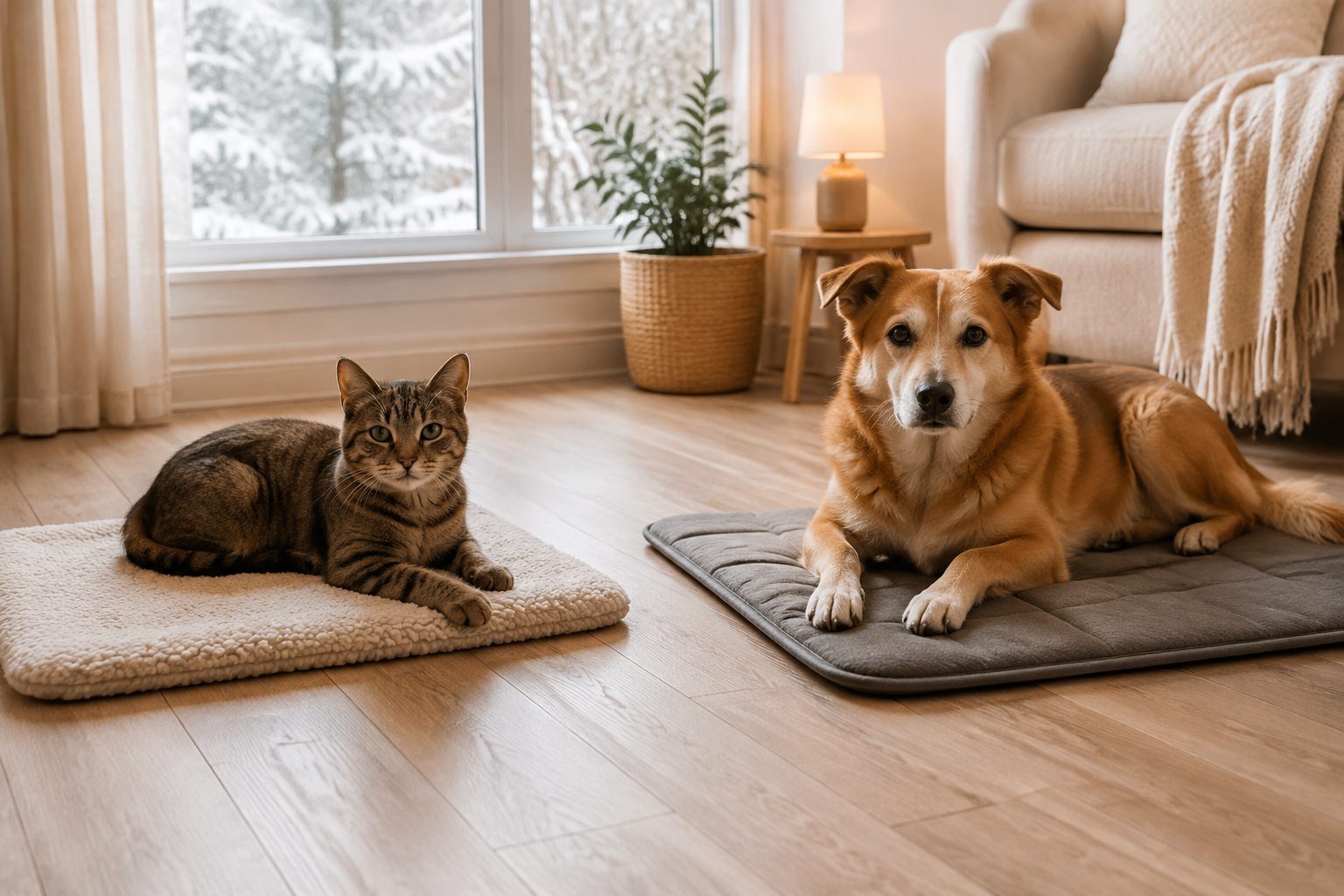
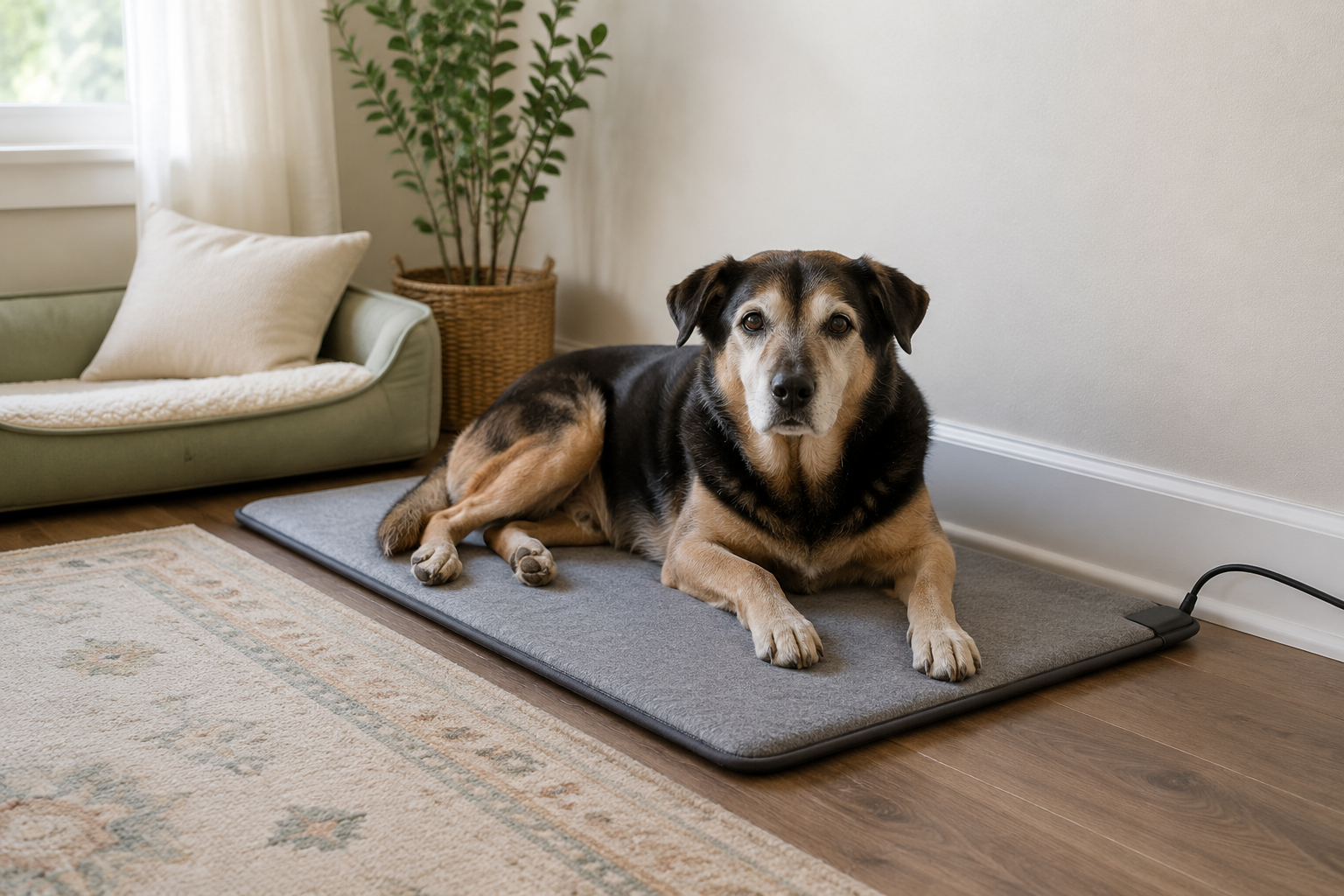
A pet heating pad can give a cat or dog a warmer place to rest during cold weather, but the right type depends on where and how it will be used. They may be especially appealing to senior pets, small animals, short-haired breeds, and pets that naturally seek warm sleeping areas. The safest choice, however, depends on more than warmth alone.
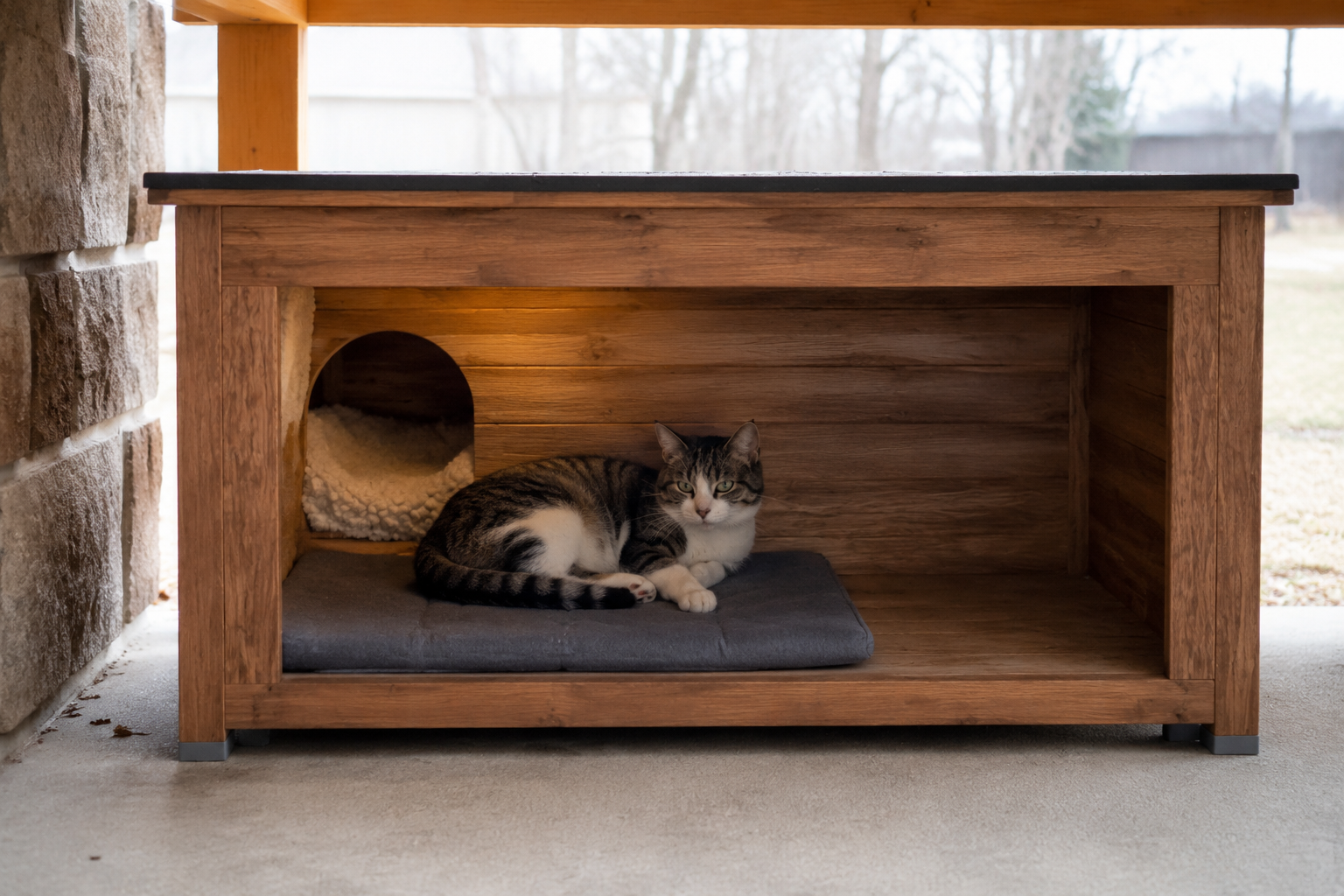
An indoor cat mat, a rigid pad for a sheltered outdoor cat house, and a self-warming travel mat serve different purposes. Before choosing one, consider whether the product is approved for the intended location, whether your pet can move away from the heated area, and whether the cord and heating system suit your pet’s behavior.
For this guide, we selected four products supported by current official manufacturer documentation. Our recommendations cover soft outdoor warmth, a more rugged outdoor surface, gentle indoor electric heat, and a non-electric option.
Quick Answer: For sheltered outdoor use, the K&H Lectro-Soft offers soft, thermostatically controlled warmth in three sizes. The rigid K&H Extreme Weather Kitty Pad is better suited to cat shelters where a more durable surface is preferable. Indoor cats may benefit from the low-wattage K&H Thermo-Kitty Mat, while the cord-free FurHaven ThermaNAP is a practical option for travel and households that prefer to avoid electrical cords.
If you are also improving your pet’s daily setup, see our guide to smart water fountains for cats and dogs.
Key Takeaways
- Match the product to its approved location; an indoor-only mat should never be used outside, and an outdoor-rated pad still needs the placement specified by its manufacturer.
- Always give your pet enough room to move off the heated surface, especially if it is older or has limited mobility.
- Inspect cords and pads regularly, and stop using any product that shows cracks, fraying, exposed wiring, or moisture damage.
- Self-warming mats reflect a pet’s body heat rather than generating heat, making them better suited to indoor use and travel than severe outdoor cold.
- Ask a veterinarian before using supplemental heat for kittens, puppies, recovering pets, or animals that cannot reposition themselves reliably.
At a Glance
- Best Soft Heated Pad for Sheltered Outdoor Use: K&H Lectro-Soft Outdoor Heated Pet Bed — a thermostatically controlled pad with a soft foam base, washable fleece cover, and multiple sizes.
- Best Rugged Pad for Outdoor Cat Shelters: K&H Extreme Weather Heated Kitty Pad — a rigid ABS pad with a steel-wrapped cord for sheds, garages, barns, porches, and covered cat houses.
- Best Indoor Heated Mat for Cats: K&H Thermo-Kitty Mat — a low-wattage, thermostatically controlled mat designed for indoor resting areas.
- Best Non-Electric Option: FurHaven ThermaNAP Self-Warming Pet Bed Mat — a lightweight mat that reflects a pet’s body heat without a plug or power cord.
Quick buying tip: Match the product to its intended environment first. An indoor-only mat should not be used outside, and even an outdoor-rated electrical pad should be installed exactly as its manufacturer directs.
Are Pet Heating Pads Safe?
Pet-specific heating pads can be used safely when the product is suitable for the location, remains in good condition, and is used according to its instructions. The American Kennel Club advises choosing a heated bed made for pets, keeping cords away from chewing, and ensuring that the animal can leave the heated surface. It also notes that pets with limited mobility can face a greater risk of overheating or burns because they may not be able to move away easily. Read the AKC’s heated dog bed safety guidance before deciding whether an electric bed suits your pet.
Keep these precautions in mind:
- Use only a product approved for the intended indoor or outdoor setting.
- Inspect the pad, plug, and cord regularly. Stop using the product if you find cracks, exposed wiring, moisture inside the unit, or other damage.
- Give your pet enough unheated space to move away whenever it wants.
- Never place an electric pad where standing water, flooding, or direct precipitation may reach it unless the manufacturer explicitly permits that installation.
- Do not add blankets, cushions, or covers unless the manufacturer allows them; extra layers can change how heat dissipates.
- Speak with your veterinarian before using supplemental heat for kittens, puppies, pets recovering from surgery, pets with reduced sensation, or animals that cannot reposition themselves reliably.
- Do not treat a pet warming bed as medical heat therapy. A veterinarian should guide heat treatment for an injury or health condition.
Pet Heating Pads vs. Human Heating Pads
A household heating pad is not a direct substitute for a pet bed or pet heating mat. Human products may have different temperature ranges, timers, construction, and safety instructions. For routine resting warmth, use a product made for pets.
A veterinarian may sometimes recommend a short, controlled warm compress for a specific problem, but that is different from allowing a pet to lie on a human heating pad for an extended period. PetMD recommends using warm compresses only under veterinary direction and keeping a protective layer between the heat source and the dog’s skin. See its veterinarian-reviewed warm-compress guidance for that limited use case.
Electric, Microwave-Heated, and Self-Warming Options
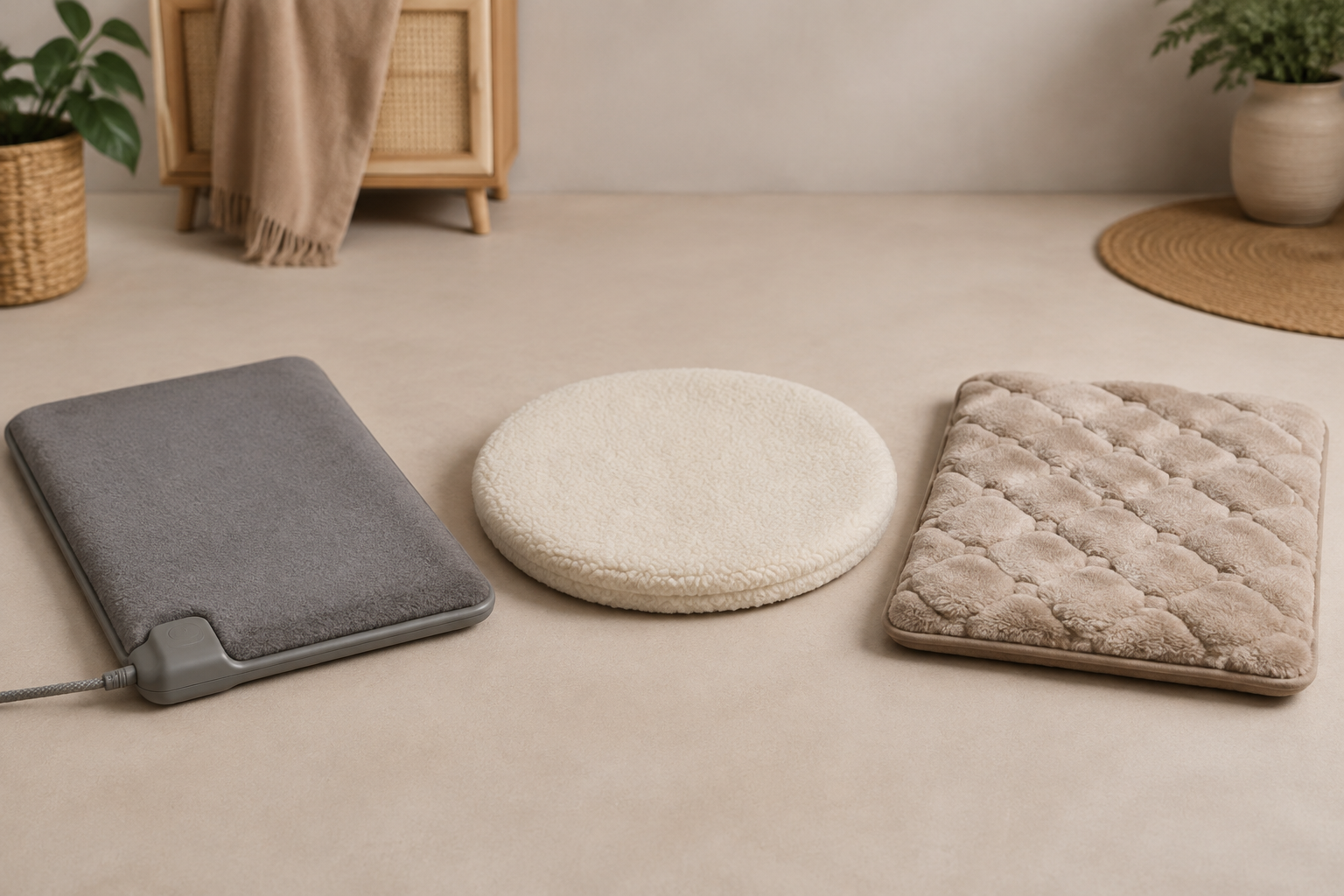
Pet heating pads, heated mats, and heated pet beds are overlapping product categories rather than identical designs. A pad or mat may provide a relatively flat heated surface, while a heated pet bed may add cushioning or a bed-style structure. When comparing them, focus on the heating method, intended location, usable size, and manufacturer’s safety instructions rather than the product name alone.
Thermostatically Controlled Electric Pads
These products use electricity and an internal thermostat to manage surface warmth. Some feel only mildly warm when unoccupied because a pet’s body helps retain heat at the surface. Check the manufacturer’s testing instructions instead of assuming that a gently warm empty pad is defective.
Microwave-Heated Pads
Microwave-heated products store heat without remaining connected to an outlet. They avoid a cord during use but must be heated for the correct time and microwave wattage. Follow the specific product instructions carefully and inspect the pad before every reheating cycle.
Self-Warming Mats
Self-warming mats use insulating or reflective layers to return some of the pet’s body heat. They do not actively generate heat, so their warmth is gentler and depends on the pet and room conditions. They can be useful where a cord is undesirable, but they are not a substitute for a heated shelter in severe cold.
How We Selected These Pet Heating Pads
To identify the best pet heating pads for different needs, we reviewed specifications and care instructions from official manufacturer pages, then compared each product by intended environment and practical use. We did not use price as a selection factor because prices and promotions change frequently.
Our main criteria were:
- Documented intended use: Indoor, sheltered outdoor, or both.
- Heat management: Thermostatic control or a clearly explained self-warming design.
- Electrical safety information: Whole-product safety certification where documented, protected cords, and manufacturer safeguards.
- Construction: Soft or rigid surface, water-resistant or waterproof materials, and suitability for the stated environment.
- Pet choice: Enough flexibility to arrange the sleeping area so the pet can move off the warmth.
- Cleaning: Removable washable covers or wipe-clean surfaces.
- Verification: A current official manufacturer page containing the product’s specifications and instructions.
Best Pet Heating Pads for Cats and Dogs
1. Best Soft Heated Pad for Sheltered Outdoor Use: K&H Lectro-Soft Outdoor Heated Pet Bed
Why It Stands Out
The K&H Lectro-Soft Outdoor Heated Pet Bed combines a soft foam base with thermostatically controlled electric warmth. Unlike rigid outdoor pads, it provides cushioning that may suit pets that prefer a softer resting surface. The manufacturer lists it for indoor or outdoor use in sheltered locations such as a pet house, garage, barn, shed, or covered porch.
It is available in three sizes, making it easier to match the sleeping surface to a cat or dog without covering the entire rest area. The product includes a removable fleece cover and a steel-wrapped cord. K&H describes the PVC exterior as waterproof and states that the complete product is tested and certified by MET Labs. The manufacturer does not recommend this soft-bodied model for destructive pets.
Best For
Cats and dogs needing a soft heated surface in an indoor room or properly sheltered outdoor area.
Key Specifications
| Feature | Manufacturer Information |
|---|---|
| Product type | Soft electric heated pet bed |
| Intended location | Indoor or sheltered outdoor use |
| Heat control | Internal preset thermostat |
| Construction | Foam-filled, waterproof PVC exterior with fleece cover |
| Sizes and power | Small: 14 × 18 inches, 20 watts; medium: 19 × 24 inches, 40 watts; large: 25 × 36 inches, 60 watts |
| Cord | Steel-wrapped, 5.5 feet |
| Cleaning | Removable, washable fleece cover; follow instructions for the pad |
| Safety documentation | MET Listed according to K&H |
| Warranty | One-year limited warranty |
Pros
- Soft foam base provides more cushioning than a rigid outdoor pad.
- Multiple sizes accommodate different cats and dogs.
- Thermostatic heat control does not require manual temperature adjustment.
- Steel-wrapped cord adds protection around the electrical cable.
- Removable fleece cover simplifies routine cleaning.
- Official manufacturer documentation clearly explains intended placement and testing.
Cons
- Requires a suitable electrical outlet.
- Outdoor use still requires a protected, sheltered location.
- The manufacturer does not recommend this soft model for destructive pets.
- It has no user-adjustable temperature control or timer.
Our Verdict
The K&H Lectro-Soft is a practical choice when a pet needs both active warmth and a cushioned surface. Its range of sizes makes it more flexible than a cat-only mat, but owners of destructive or persistent chewers should consider a rigid product recommended for harder use.
View current K&H Lectro-Soft product information
2. Best Rugged Pad for Outdoor Cat Shelters: K&H Extreme Weather Heated Kitty Pad
Why It Stands Out
The K&H Extreme Weather Heated Kitty Pad uses a rigid ABS exterior rather than a soft foam body. That construction makes it better suited to cats that may damage a softer pad. Its internal thermostats regulate warmth, while the 5.5-foot steel-wrapped cord provides added protection against chewing.
The manufacturer recommends the pad for covered areas such as cat houses, sheds, barns, garages, and porches. It includes a removable fleece cover, but the cat should still have space beside the pad so it can choose a cooler resting position. K&H also advises consulting a veterinarian before using it with young kittens, pets recovering from surgery, or animals that cannot voluntarily move away from the heat.
Best For
Outdoor, community, or barn cats using a dry, weather-protected shelter with safe access to electricity.
Key Specifications
| Feature | Manufacturer Information |
|---|---|
| Product type | Rigid electric heated pet pad |
| Intended location | Indoor or sheltered outdoor use |
| Heat control | Internal thermostatic control |
| Construction | Rigid ABS plastic |
| Dimensions | 12.5 × 18.5 inches |
| Power | 40 watts |
| Cord | Steel-wrapped, 5.5 feet |
| Cover | Removable, washable fleece cover included |
| Safety documentation | MET Listed according to K&H |
| Warranty | One-year limited warranty |
Pros
- Rigid shell is more appropriate for harder-use settings than a soft foam pad.
- Thermostatic control manages warmth without a manual temperature setting.
- Steel-wrapped cord helps deter cord damage.
- Compact dimensions suit many outdoor cat shelters.
- Smooth rigid surface is straightforward to wipe clean after removing the cover.
Cons
- The rigid surface offers less cushioning than a foam bed.
- It is sized mainly for cats and other small animals.
- It requires electricity and careful cord routing.
- It must be used in a sheltered area rather than as a stand-alone exposed outdoor bed.
Our Verdict
The K&H Extreme Weather Heated Kitty Pad is the more suitable of these selections for a rugged, sheltered cat setup. It provides active heat without the exposed soft body of a foam pad, but it does not replace a dry, insulated, wind-protected shelter. The manufacturer’s veterinary caution is particularly important for kittens and less-mobile cats.
For community cats, also review Alley Cat Allies’ winter shelter and cold-weather recommendations.
View current K&H Extreme Weather Heated Kitty Pad information
Related reading: Owners of outdoor or adventurous cats may also find our guide to GPS trackers for cats useful.
3. Best Indoor Heated Mat for Cats: K&H Thermo-Kitty Mat
Why It Stands Out
The K&H Thermo-Kitty Mat is a low-wattage electric mat intended specifically for indoor use. Its dual thermostats manage heat automatically, and the manufacturer explains that the surface remains slightly above room temperature when empty before warming further toward the pet’s normal body temperature once occupied.
The mat uses six watts, measures 12.5 by 25 inches, and has a removable heater and cover for cleaning. Because it does not include adjustable temperature levels or a timer, it is designed as a simple plug-in mat rather than a programmable heating device.
Best For
Indoor cats and small pets that regularly seek a warm resting area and can move on and off the mat independently.
Key Specifications
| Feature | Manufacturer Information |
|---|---|
| Product type | Soft electric heated cat mat |
| Intended location | Indoor use only |
| Heat control | Dual thermostatic control |
| Dimensions | 12.5 × 25 inches |
| Power | 6 watts |
| Care | Removable heater and washable cover |
| On/off switch | No; operates when plugged in |
| Safety documentation | MET Listed according to K&H |
| Warranty | One-year limited warranty |
Pros
- Low-wattage design provides gentle indoor warmth.
- Thermostatic control removes the need to select a temperature.
- Long, narrow size fits many common cat resting areas.
- Removable heater and cover support easier cleaning.
- Official instructions explain how to test the mat’s warmth.
Cons
- Indoor use only.
- No timer, on/off switch, or adjustable temperature settings.
- Primarily sized for cats and small pets.
- Requires a nearby outlet and safe cord placement.
Our Verdict
The Thermo-Kitty Mat suits owners who want a straightforward heated surface for an indoor cat. Its low power use and automatic thermostatic design keep operation simple, although buyers wanting manual controls or a large dog-sized surface will need a different product.
View current K&H Thermo-Kitty Mat information
Related reading: Warmth can support comfort, but it does not reveal changes in a pet’s health. Learn what connected devices can and cannot do in Are Dog Health Monitoring Collars Worth It?
4. Best Non-Electric Option: FurHaven ThermaNAP Self-Warming Pet Bed Mat
Why It Stands Out
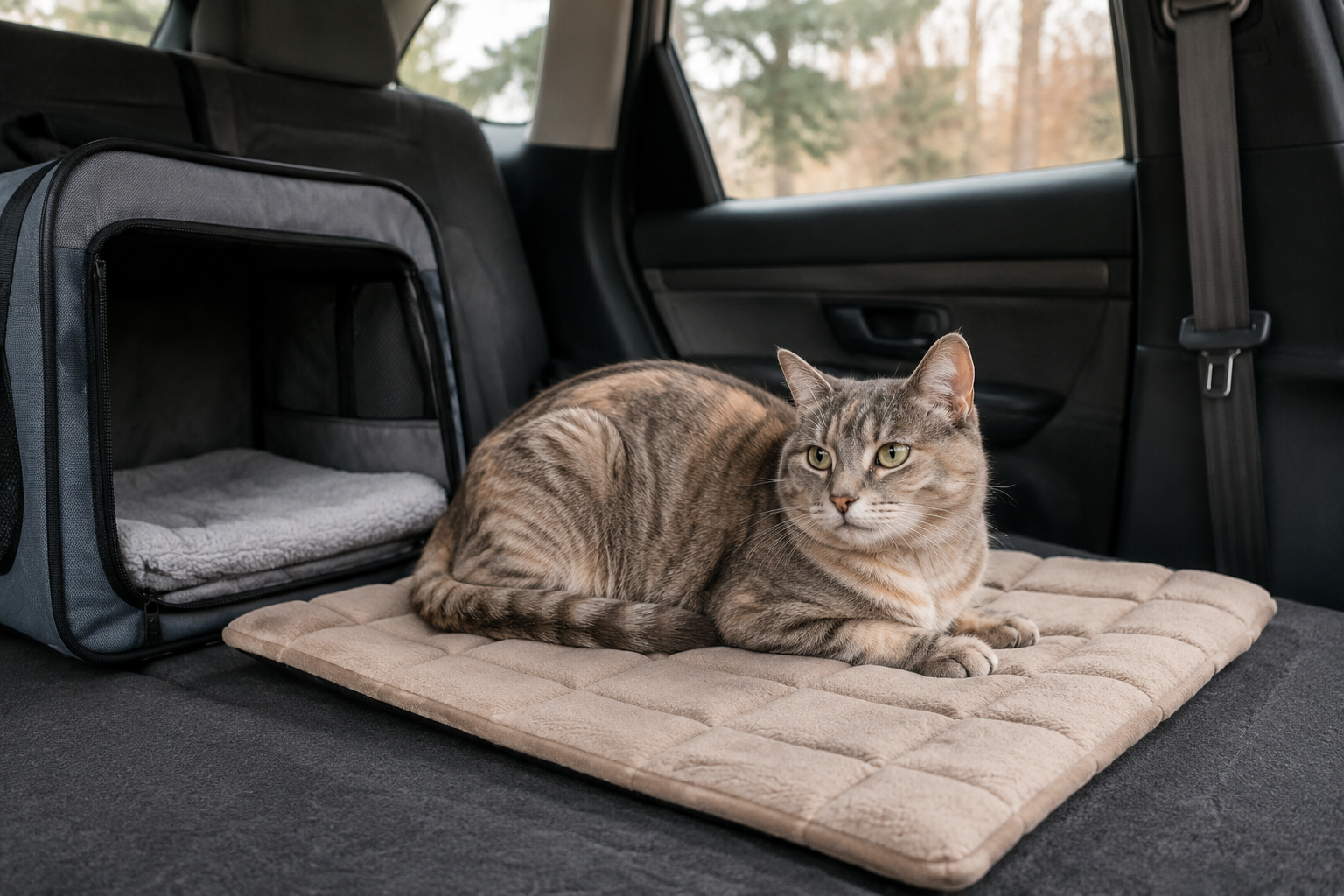
The FurHaven ThermaNAP provides passive warmth without electricity. Its insulating polyester fiber batting captures and returns some of a pet’s body heat, while the faux-fur sleeping surface creates a soft place to rest. With no plug, controller, or cord, it is easier to place in different indoor locations or take while traveling.
This mat does not generate active heat and should not be treated as equivalent to an electric warming pad. Its performance depends on the pet’s body heat and the surrounding temperature.
Best For
Indoor cats and dogs, travel, crates where properly sized, and households that prefer a cord-free warming surface.
Key Specifications
| Feature | Manufacturer Information |
|---|---|
| Product type | Non-electric self-warming mat |
| Heat source | Insulating polyester fiber batting captures and returns some of the pet’s body heat |
| Intended location | Indoor and travel use |
| Material | Faux-fur surface with insulating polyester fiber batting |
| Sizes | Small and large |
| Power or cord | None |
| Cleaning | Machine washable according to FurHaven instructions |
Pros
- Requires no outlet or electrical cord.
- Lightweight design is easy to move or pack for travel.
- Available in two sizes for different pets and resting areas.
- Machine-washable construction simplifies maintenance.
- Provides a gentler alternative for pets that only need reflected body warmth.
Cons
- Does not produce active heat.
- Warmth varies with the animal and room temperature.
- Thin construction provides less cushioning than a padded or orthopedic bed.
- Not a substitute for an insulated outdoor shelter or active heat in severe cold.
Our Verdict
The FurHaven ThermaNAP is a useful cord-free choice for pets that enjoy a warmer indoor resting surface. It is also convenient for travel, but owners needing dependable active warmth should choose an appropriately rated electrical product instead.
View current FurHaven ThermaNAP product information
Pet Heating Pad Comparison
| Product | Best For | Location | Heat Type | Cord Protection | Sizes |
|---|---|---|---|---|---|
| K&H Lectro-Soft Outdoor Heated Pet Bed | Soft heated support for cats and dogs | Indoor or sheltered outdoor | Thermostatically controlled electric heat | Steel-wrapped cord | Small, medium, large |
| K&H Extreme Weather Heated Kitty Pad | Rugged outdoor cat-shelter setup | Indoor or sheltered outdoor | Thermostatically controlled electric heat | Steel-wrapped cord | One standard size |
| K&H Thermo-Kitty Mat | Gentle indoor warmth for cats | Indoor only | Thermostatically controlled electric heat | Standard cord | One standard size |
| FurHaven ThermaNAP Self-Warming Mat | Cord-free indoor warmth and travel | Indoor | Reflected body heat | No cord | Small, large |
How to Choose the Right Pet Heating Pad
1. Start With the Intended Location
Use an indoor-only product indoors. For an outdoor shelter, choose a product whose manufacturer specifically allows outdoor or sheltered outdoor placement. “Water-resistant” does not mean that a powered pad can sit in standing water or remain exposed to rain and snow.
2. Give Your Pet a Cooler Option
Do not make the heated surface the only place where your pet can lie. The animal should be able to move to an unheated area without assistance. This is particularly important for senior pets and animals with limited mobility.
3. Consider Chewing and Scratching
A steel-wrapped cord can add protection, but no electrical cord should be considered chew-proof. If your pet persistently chews cords or destroys bedding, a non-electric mat may be more appropriate. Discuss special warming needs with your veterinarian.
4. Check Size and Sleeping Position
Compare the pad’s usable dimensions with the way your pet normally sleeps. A pet should fit comfortably, but the overall resting area should still include room away from the heat.
5. Review Cleaning Instructions
Some products have removable machine-washable covers, while the heated body must be wiped clean. Always unplug an electrical product and follow the manufacturer’s care directions. Do not immerse a powered unit unless its instructions explicitly say that you can.
6. Look Beyond Adjustable Temperature Claims
More settings do not automatically make a pad safer or more suitable. Consider the entire design: thermostat behavior, cord construction, whole-product safety documentation, intended environment, cleaning requirements, and whether your pet can move away.
Do not compare pet heating pads by wattage alone. A larger pad may use more power because it has a larger heated surface, while a smaller thermostatically controlled mat may use much less. Wattage describes electrical power use, not by itself the surface temperature or suitability for your pet.
Frequently Asked Questions
What is the best pet heating pad?
The best choice depends on the pet and setting. The K&H Lectro-Soft suits cats and dogs that need a soft heated surface in a sheltered location. The K&H Extreme Weather Kitty Pad offers a rigid surface for protected outdoor cat shelters. The K&H Thermo-Kitty Mat is designed for indoor cats, while the FurHaven ThermaNAP provides non-electric warmth.
Can I leave a pet heating pad plugged in all day?
Follow the instructions for the exact model. Some thermostatically controlled products are designed for extended operation, but that does not remove the need for correct placement, regular inspection, and a safe electrical connection. Unplug a damaged product immediately and follow manufacturer advice when leaving home for an extended period.
Should a pet heating pad feel hot when it is empty?
Not necessarily. Some thermostatically controlled beds feel only mildly warm while empty because heat dissipates into the air. K&H instructs owners to test certain models with a pillow for a limited period and then feel beneath it. Use only the test method provided for your model; do not cover the pad during normal operation unless permitted.
Are heated pet beds suitable for senior pets?
Senior pets may enjoy gentle warmth, but mobility limitations, reduced sensation, or health conditions can increase risk. Ask your veterinarian whether supplemental heat is appropriate, and make sure the pet can leave the heated surface without help.
Can I put a blanket over a heated pet pad?
Only if the manufacturer permits it. Adding an unapproved blanket or thick cover can alter heat retention. Use the supplied cover or a manufacturer-approved replacement and follow the product instructions.
Can an outdoor heating pad replace an insulated pet shelter?
No. A heating pad is supplemental warmth, not a substitute for a dry, weather-protected, insulated shelter. Outdoor animals also need protection from wind and moisture, suitable bedding, fresh water, and regular monitoring.
Are self-warming mats the same as electric heating pads?
No. A self-warming mat reflects some of the animal’s body heat but does not generate active heat. It is cord-free and portable, but it generally provides less warmth than an electrical product.
Final Verdict
When comparing the best pet heating pads, prioritize the intended location, construction, and your pet’s ability to move away—not the highest advertised temperature or the longest feature list.
The K&H Lectro-Soft Outdoor Heated Pet Bed is the most flexible soft electric option in this guide because it comes in multiple sizes and can be used indoors or in a sheltered outdoor area. The K&H Extreme Weather Heated Kitty Pad is better suited to a rugged, protected cat-shelter setup. For indoor cats, the K&H Thermo-Kitty Mat offers simple thermostatic warmth with low power use. The FurHaven ThermaNAP is the practical cord-free alternative for gentle warmth and travel.
Whichever product you choose, follow the manufacturer’s instructions, inspect it regularly, keep the sleeping area dry, and ensure that your pet always has room to move off the warm surface.
If you spend time away from home, a pet camera can help you check your pet’s resting area remotely. See our guide to the best pet cameras for suitable options.